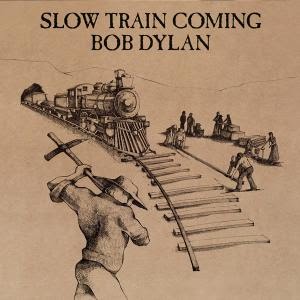
Showing posts with label Shot of Love. Show all posts

Wednesday, August 4, 2010

Bob Dylan’s Top-Five Songs Beginning with "H"

1. “Highway 61 Revisited” (1965). Even if Dylan had never recorded Slow Train Coming, Saved, or Shot of Love, he’d still be the king of Bible blues on the basis of the first verse of this rip-roaring song alone. When it came out, general biblical knowledge was still fairly common, so as many people probably followed the conversation between Abraham and God about sacrificing Isaac as followed the references to broken phones, the Welfare Department, and World War III. Nowadays, you have to wonder. Kids cottoning to Dylan for the first time might think that God is talking to Abraham Lincoln--you know, the guy who said, “Half of the people can be part right all of the time / Some of the people can be all right part of the time / But all of the people can’t be all right all of the time.”

2. “Highlands” (1997). This song is as close to taking a long, leisurely walk with Dylan as most of us are likely to get--a long, leisurely walk, that is, with a stopover at a diner for some scrambled eggs, which is where things would really get interesting. There you’d be, skimming the menu, casually explaining to Dylan how to tell a real blonde from a fake, when a waitress with long, white legs would walk up and significantly affect the room temperature. After she and Dylan had finished flirting each other up, you’d say to Bob, “You like Erica Jong too? Wow! I thought I was the only one. What’s your favorite book of hers? Fear of Flying? Sappho’s Leap? Fear of Fifty? I mean, I know it’s a hard call to make but--” Then you’d notice that Dylan was just staring at you. Awkward silence would follow. Finally, he’d say, “I was only joking.” You’d try to rebound by saying that maybe he should record “I Was Only Joking” as a thank-you to Rod Stewart for all of the Dylan songs he had recorded over the years, but it would be too late.

3. “Huck’s Tune” (2007). A gentle, sad waltz with Donnie Herron’s steel guitar shedding tears that the world-weary singer has grown even world-wearier trying to hide. You think he’s blue? You would be too if you had to leave a woman whose lips drip honey and who’s fine as wine. Of the forty-two lines, all but the one ending in “sunshine tan” (is there a “moonshine tan”?) evince the precise expression that, if you’re lucky, you can rise to when you want to have to say something only once--and would rather not say it at all.

4. “Heart of Mine” (1981). The following review ran in either Melody Maker or the New Musical Express in September 1981: “BOB DYLAN: ‘Heart Of Mine’ (CBS). What is this trash! The stuff you can get away with when you’re a Name. This sounds like an out-take from ‘Self Portrait’. As expected Bob delivers the tune in his famous ‘I can’t sing but who cares’ nasal drone while the band rambles along in a sort of folky-thingy type vein. ‘Ragged’ would be complimentary--backwards is nearer the mark. Still, it’s all so real, so pure, so agonisingly dull. PS: I didn’t mean it God--don’t strike me down when they’re still repeating ‘Alias Smith And Jones’. The Zim has written some GREAT songs--this ain’t one of ’em.” Pretty funny, you have to admit, and somehow both one hundred percent right and one hundred percent wrong at the same time.
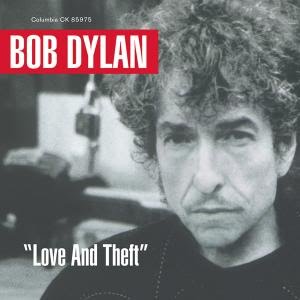
5. “High Water (For Charley Patton)” (2001). In his book Deep Blues, Robert Palmer has this to say about Charley Patton’s original “High Water Everywhere”: “[I]n the recorded version of 'High Water Everywhere,' … Patton found public events meaningful only insofar as they impinged on his private world--his perceptions, his feelings.” (Like post-protest Dylan, one might add.) “This,” Palmer continues, “is one of the fundamental distinctions between blues and the black music that came before it. Those earlier songs … deal in archetypes. The singer-narrator remains relatively cool and uninvolved. In blues, there is no narration as such, and while one finds signs and symbols and proverbial homilies aplenty, there is nothing as abstract as an archetype.” (Signs and symbols in Dylan’s High Water”: coffins afloat in the flood, a lover’s panties thrown onto the dashboard, Charles Darwin stranded on a highway. Homilies: “I’m preachin’ the Word of God,” “Keeping away from the women / givin’ ’em lots of room,” “It’s bad out there”) “The singer is so involved that in many cases his involvement becomes both the subject and the substance of the work. Such unflinching subjectivity may seem callous and self-involved [Callous and self-involved? Dylan?], but in the context of its time and place it was positively heroic. Only a man who understands his worth and believes in his freedom sings as if nothing else matters.” (Nobody sings Dylan as if nothing else matters like Dylan.)

(Bob Dylan's Top-Five Songs Beginning with "G":
http://arsenioorteza.blogspot.com/2010/08/bob-dylans-top-five-songs-beginning_02.html)

Monday, August 2, 2010

Bob Dylan's Top-Five Songs Beginning with "G"

1. “The Groom’s Still Waiting at the Altar” (1981). Of Dylan’s three gospel records, Shot of Love was the least focused--not only sonically (“loose” and “ragged” can be exciting, but “coming apart at the seams” is something else altogether) but also thematically. Was following “Property of Jesus” with a paean to Lenny Bruce some kind of joke? And if so, on whom? Then Columbia released “Heart of Mine” as a single, and what should be pressed on the other side but this loose, ragged, and very exciting conflation of gospel (Jesus is the Church’s “bridegroom” in the New Testament) and Dylan’s careening mid-’60s epiphany-blues? How was this left off the album? Dylan would later say that he didn’t think he had gotten the recording right, but with the exception of “Every Grain of Sand,” no song on Shot of Love sounds as if Dylan had gotten the recording right. True, the non-album B-side of “Gotta Serve Somebody,” the still-unanthologized “Trouble in Mind,” was a buried nugget of considerable worth too, but not nearly as much worth as “Groom.” Apparently Dylan eventually warmed up to it himself as it was later not only added to Shot of Love but also included on his Greatest Hits Vol. 3 and the 2007 compilation Dylan. If learning that Chuck Plotkin sped up the master tape to give the song a little more punch runs afoul of your purist’s instincts, put your instincts in your pocket and your purism on the ground.

2. “Girl from the North Country” (1963). It’s nice to hear the (young) man who wrote or would write “Don’t Think Twice, It’s All Right,” “It Ain’t Me, Babe,” “Most Likely You Go Your Way (and I’ll Go Mine),” et. al. get his comeuppance: He’s actually missing someone whom he has no hope of running into again any time soon--possibly one of the very girls he blew off so his boot heels could go wanderin’. Serves him right, you want to say. Only somewhere in the wistful tenderness of both his singing and his gently plucked acoustic guitar, you detect a confidence of tone quite likely deriving from his sensing that he knows there’ll be plenty of others enough (if not just) like her. That’s what’s missing from “Scarborough Fair,” ye olde folk tune Dylan based this song on. And it was even more missing after Simon & Garfunkel got through with it.

3. “Gotta Serve Somebody” (1979). I don’t know what’s harder to believe, that this nerve-touching, bluesy gospel anthem was almost left off Slow Train Coming or that it managed to make the Billboard top forty, peaking at the twenty-four spot during the same week that Robert John’s “Sad Eyes” hit Number One. I do know that it didn’t deserve the bitch slapping it got from John Lennon (“Serve Yourself”). First, the terms Dylan uses to describe every stratum of society are funny; second, you don’t even have to believe in God to accept the idea that every choice we make “serves” someone else’s better interests. (Lennon’s labors have certainly left Yoko Ono and his children better off.) Or you can simply switch “evil” for “devil” and “good” for “the Lord.” (Certainly, our more important decisions nudge the world a little in one direction or the other.) Third, although it has become common to regard Mark Knopfler or Jerry Wexler as Slow Train Coming’s musical savior, it’s Barry Beckett’s eerily low-key electric piano that distinguishes this song from anything else on Dylan’s four consecutive albums starting with S.

4. “Get Your Rocks Off” (1967). A lot of the Big Pink tunes left off The Basement Tapes deserved to be. This ridiculously dirty ditty, however, did not. Perhaps the decision makers at Columbia thought it was too slow, but, really, if it were any faster, the punch line at the end of the refrain couldn't sneak up on you and Richard Manuel’s basso profundo “Get ’em off”s would get lost in the rush (as would Garth Hudson’s Labyrinthine Olympics organ runs). And the Manfred Mann’s Earth Band version on Messin’ gets its rocks back on. (For some reason, the lyrics aren’t posted at bobdylan.com. You can find them here: http://www.lyricstime.com/bob-dylan-get-your-rocks-off-lyrics.html.)

5. “Got My Mind Made Up” (1986). Slight words, I’ll admit, but Tom Petty and the Heartbreakers’ loco-motorvatin’ Bo Diddley beat was Dylan’s most solid rock of the ’80s. And, actually, some of the words aren’t slight at all--especially stanzas four and five, which anyone who’s ever had his brain charmed away by some young lazy slut will swear are the essence of wit.

(Bob Dylan's Top-Five Songs Beginning with "F": http://arsenioorteza.blogspot.com/2010/08/bob-dylans-top-five-songs-beginning.html)

Saturday, July 31, 2010

Bob Dylan's Top-Five Songs Beginning with "E"


1. “Every Grain of Sand” (1981). Unquestionably the fullest verbal flowering of Dylan’s Vineyard Fellowship Bible studies, the lyrics would be perfect if not for the flawed subject-verb agreement in the second line and the penultimate line of the sixth verse, which Dylan himself has been known to tamper with onstage. But I’ve always thought the song as a whole needed something a little more than four chords and the truth--not Steve Douglas’s soothingly ebbing sax, which it already has, but a maybe a faster or at least a more syncopated rhythm, anything to keep Dylan’s meditations from seeming so meditative. Still, it’s always helpful under any circumstances to be reminded that if you gaze into temptation’s angry flame, it gazes also into you.

2. “Everything Is Broken” (1989). Thank heaven for this song and its fellow upbeat rocker “Political World,” without which Oh Mercy’s meditations would’ve seemed too meditative as well. And it made for a rousing set-opener for a time in the early nineties, especially when both Ian Wallace and Winston Watson thwacking away. I’m partial to the line about “broken pipes” just now, as I’m still paying on a plumber bill. But usually I’m partial to the couplet that goes “Every time you leave and go off someplace, / Things fall to pieces in my face,” which swerves the song from the socio-political to the privately emotional almost as deftly as Joni Mitchell’s last-verse admission in “Big Yellow Taxi” that it’s really being left by her man and not DDT or paved parking lots that make her blue.

3. “Emotionally Yours” (1985). When Empire Burlesque was released, some people found this headlong plunge into learn-to-slow-dance romance too much to take. And in some ways it is: the synthesized horns, the Arthur Baker-shellacked production, the piling on of sweetheart clichés, the shortness of breath that forces Dylan to break his last “emotionally” into two words. But coming from a man who’d once written, “Love is all there is / It makes the world go ’round” and who’d once said, “The world is full of non-supporters and backbiters … [b]ut it’s also full of people who love you,” this song or at least one like it shouldn’t have been all that surprising (especially since one like it, “I‘ll Remember You,” occurred overdisc). Not too much to take no matter how you slice it: Mike Campbell’s movingly lovely guitar solo--and the radically transformed version that the O’Jays took to the R&B top ten the year during the last year of Dylan and Carolyn Dennis’s marriage.

4. “Eternal Circle” (1963). Slight but funny, and a rare instance of Dylan practicing the art of self-mockery for self-mockery’s sake. If the performer-smitten girl in the coffee-house crowd couldn’t wait through seven minutes of “A Hard Rain’s A-Gonna Fall” or the other “long” songs Dylan was performing at the time before bolting for greener pastures, imagine how nuts “Highlands” would’ve made her thirty-four years later.

5. “Enough Is Enough” (1984). If Dylan had written and performed more than five songs starting with E, this song would not be among the top five. But he didn’t, so it is. Not that it’s bad--in fact, it sounds a lot like the version of Sonny Boy Williamson’s “Don’t Start Me Talkin’” that Dylan performed with members of the Cruzados on the David Letterman show a few months before debuting this song on the Real Live tour, so much so that for years I thought "Enough Is Enough" was “just” some old blues standard. And given Dylan’s history of love and theft, maybe it is.

(Bob Dylan's Top-Five Songs Beginning with "D":
http://arsenioorteza.blogspot.com/2010/07/bob-dylans-top-five-songs-beginning_7970.html)

Thursday, May 13, 2010

IT’S ALRIGHT, MA (I’M ONLY PLAGIARIZING)

Ever since Joni Mitchell accused Bob Dylan of being a fake and a plagiarist in the Los Angeles Times last month (http://www.latimes.com/entertainment/news/music/la-et-jonimitchell-20100422,0,5684541.story?page=2), Dylan fans have rushed to their hero’s defense. His use of other people’s words, they say, merely puts him in the folk-blues tradition, wherein the line between love and theft is so thin that if it were a man Dylan would’ve called him “Mr. Jones” and written a ballad about him by now.

Still, the list of authors from whom Dylan is said to have stolen recently, even in his Chronicles Volume One memoirs, is daunting. Ovid, Jack London, Chaucer, Proust, Henry Timrod, Junichi Saga—you don’t need to go to college ’cause Dylan is the book of knowledge!

So how is it, with all of the Google-using private eyes intent on unearthing even more of Dylan’s sources, that the nearly all-pervasive plagiarizing Dylan did in “writing” the songs for Slow Train Coming (1979), Saved (1980), and Shot of Love (1981) has gone completely undetected?

I too might have remained blissfully oblivious to this stratum of Dylan’s literary offenses if I hadn’t, just a few weeks ago, found myself stuck inside a motel room with the nothing-to-read-but-the-local-phonebook blues (again). (There was, of course, a TV in the room, but I’ve always believed that sometimes you’ve got to do like Elvis did and shoot the damn thing out.) Anyway, I began going through the dresser drawers, hoping that maybe a previous tenant had left a newspaper behind, when I came upon something even better: a book.

I’d never heard of it (Holy Bible) or its author (Gideon something), but when you ain’t got nothin’ else to read, you got nothin’ to lose. So, without thinking twice, I dove in.

The title of the first section was “Genesis,” so I was expecting something about Peter Gabriel, Phil Collins, Tony Banks, Mike Rutherford, maybe Steve Hackett—about anyone, in other words, but Bob Dylan. Midway through the second chapter, however, I came upon the following sentence: “And Adam gave names to all cattle, and to the fowl of the air, and to every beast of the field….” Hmmm, I thought. Where have I heard that before?

Eventually, it hit me: “Man Gave Names to All the Animals.” Track eight on Dylan’s Slow Train Coming.

At first I thought the similarity was a coincidence. Not only was there no mention of “Adam” in Dylan’s song, but Jackson Browne and Blink 182 had written entire songs mentioning “Adam” (“Song for Adam” and “Adam’s Song” respectively). So if Dylan was a plagiarist, surely they were too.

I kept reading, and for awhile everything was fine—or at least as fine as anything that’s full of lip-smackingly lowest-common-denominator sex and violence can be. (Personal to Gideon: I’m no prude, but if you ever expect Hollywood to option your work, you might want to tone down the sex and violence. The public’s tolerance of Brokeback Mountain is no guarantee that they’ll put up with filmed versions of the episodes in your book wherein the daughters of Lot get pregnant by date-raping their own father.)

Eventually, though, I got to this passage from the section called “Joshua”:

So the people shouted when the priests blew with the trumpets: and it came to pass, when the people heard the sound of the trumpet, and the people shouted with a great shout, that the wall fell down flat, so that the people went up into the city, every man straight before him, and they took the city.

Or, as Dylan put it in Slow Train Coming’s “When He Returns,” “The strongest wall will crumble and fall to a mighty God.”

Oh, no, I thought. Tell me that it isn’t true.

I shut Holy Bible. Then I opened it again. Repeatedly. At random. In a section called “Ezekiel” I read “[A]nd I will take away the stony heart out of your flesh, and I will give you a heart of flesh” and heard Shot of Love’s “Property of Jesus” (“You’ve got a heart of stone”). In another section (“Ephesians”) I read “For we wrestle not against flesh and blood, but against … spiritual wickedness in high places” and heard Slow Train Coming’s “Precious Angel” (“Now there’s spiritual warfare, flesh and blood breaking down”). In yet another (“1 Corinthians”) I read “[Charity] beareth all things, believeth all things, hopeth all things, endureth all things” and heard Shot of Love’s “Watered-Down Love” (“Love that’s pure hopes all things, / believes all things, won’t pull no strings…”).

By the time I quit playing Spot the Plagiarism, I’d found over fifty passages in Holy Bible that were suspiciously similar to lyrics I'd long assumed Dylan had come up with on his own. Some of the similarities were admittedly tenuous (cf. “Thou shalt break them with a rod of iron…” [“Psalms]” and “The iron hand, it ain’t no match for the iron rod” [“When He Returns”]; “Blessed are the pure in heart: for they shall see God” [“Matthew”] and “Try to be pure in heart, they arrest you for robbery” [“The Groom’s Still Waiting at the Altar”]). Others, however, indeed the majority, were nearly identical.

The album on which Dylan did the most verbatim stealing was Saved. The title track alone has four offending passages: “By His spirit I’ve been sealed” (Dylan), “[I]n whom also, after that ye believed, ye were sealed with that Holy Spirit of promise…” (“Ephesians”); “I’ve been saved / by the blood of the lamb” (Dylan), “And they overcame him by the blood of the Lamb, and by the word of their testimony…” (“Revelation”); “He bought me with a price” (Dylan), “For ye are bought with a price: therefore glorify God in your body, and in your spirit…” (“1 Corinthians”); and “Not by works / but by faith in Him who called” (Dylan), “For by grace are ye saved through faith; and that not of yourselves: it is the gift of God: not of works, lest any man should boast” (“Ephesians”).

But the song “Pressing On” has just as many such passages (e.g., “Well I’m pressing on / to the higher calling of my Lord” [Dylan] and “I press toward the mark for the prize of the high calling of God in Christ Jesus” [“Philippians”]), as does “Are You Ready?” (e.g., “Will He know you when He sees you, / or will He say, ‘Depart from Me’?” [Dylan] and “[T]hen will I profess unto them, I never knew you: depart from me, ye that work iniquity” [“Matthew”]). And two other Saved songs, as you can see from the tables below, have even more. (Click to enlarge.)


Oh yeah, I almost forgot—Dylan also plagiarized from Julia Ward Howe (Dylan: “Are you ready for that terrible swift sword” [“Are You Ready?”]?; Howe: “He hath loosed the fateful lightning of His terrible swift sword…” [“The Battle Hymn of the Republic”]), Martin Luther (Dylan: “Satan got you by the heel, there’s a bird’s nest in your hair” [“Dead Man, Dead Man”]; Luther: “You cannot keep birds from flying over your head but you can keep them from building a nest in your hair"), and the songwriting team of Joel Hirschhorn and Al Kasha (Dylan: “I believe in you even on the morning after. / Oh, when the dawn is nearing, / oh, when the night is disappearing…” [“I Believe in You”]; Hirschhorn/Kasha: “There's got to be a morning after / if we can hold on through the night” [“The Morning After”]).

I know what you’re thinking: Has Dylan no dignity? Is there no limit to the stickiness of his lyric-writing fingers? As a loyal Dylan fan, I started to think up excuses. Life is hard, I reasoned. Besides, in his busy schedule there’s often simply no time to think--of original lyrics or anything else. Or perhaps he simply no longer trusts himself. Heck, maybe he doesn’t even know he’s using other people’s words. It’s obvious, after all, that he truly loves the phrases (he wouldn’t use them otherwise), and true love does tend to forget.

But, lo and behold, just when I thought I was on the verge of being able to justify what I’d found as “poetic license” (some of it, not all of it), I discovered the worst plagiarism of all.

At first “A Satisfied Mind,” the lead track on Saved, set off no alarms, probably because its lyrics didn't overlap with Holy Bible. But I soon realized the reason they didn't: All of its lyrics come from a song with the exact same title by Red Hayes and Jack Rhodes!

Obviously, after having gotten away with his teenaged stealing of “Little Buddy” from Hank Snow (whose material was quite well known), Dylan figured he’d have no trouble getting away with stealing a song from two songwriters few people had ever heard of (cf. Hirschhorn/Kasha).

And, equally obviously, Dylan was wrong. But we can’t, in good conscience, say we weren’t warned. “People don’t do what they believe in,” he sang in “Brownsville Girl.” “They just do what’s most convenient. Then they repent.” And in “Positively 4th Street,” “If I was a master thief, perhaps I’d rob them.” Is it his fault we weren’t listening?

No. But it is his fault that he put other people’s words in his own mouth, copyrighted them as his own, and was therefore complicit in letting entire generations think that in those words we were seeing the real him at last and that his ghost was more real and genuine than all the dead souls on the boob tube.

Unbelievable? Not really. Can I forgive him? I don't want to do it, but maybe. Someday. Until then, though, toleration of the unacceptable still leads to the last round-up, and this is one new pony who plans to make like all the wild horses as long as he can fox-trot, lope, and pace.

Saturday, June 20, 2009

Maria Muldaur & Bob Dylan: The Shot of Love Incident

In "At Play in the Fields of the Lord," a chapter in his 1989 book Dylan: A Biography, Bob Spitz relates a series of interesting Bob Dylan anecdotes from the early '80s (i.e., the "Gospel Years") as told to him by Maria Muldaur. In one of them, Muldaur describes being blown off by Dylan after she'd dropped in--and been made to cool her heels for a long time in a waiting room--at the Shot of Love recording sessions. (Besides being an old and close friend of Dylan's--even accompanying him a few months earlier on his last visit to Mike Bloomfield--she had been invited to the sessions by the background singers.) "Finally, I saw his face at the little window," Spitz quotes Muldaur as saying. "He looked right at me and right through me [italics in the original]. Then he whispered something to a friend and ignored me, which was a message, I guess, so I took off."

Spitz then writes:

"Put yourself in the place of someone who had known Bob all those years and tried to keep up with the conflicting messages he sent out.... [Y]ou attempt to ride the highs and lows as long as it is humanly possible. But after awhile, you just give up trying.

"Maria went back to San Francisco feeling like [sic] she'd lost one of her best friends, just as others before her ... had felt when they had been dismissed from the entourage with similar blunt shrift."

I asked Muldaur about this incident when I interviewed her in January 1993 for the Door. The main subject of the interview was her Christian faith, so I excluded her Dylan comments from the article. But they were very interesting. As you will see from the unedited transcription below, what she made of that 1981 episode and what Spitz made of it were entirely different.
.....................

MULDAUR: What happened was that I went to the rehearsal studio because by now I had made friends with all the girl singers, right? And he [Dylan] had always welcomed me there before. I had gone there before. And so they said, "Oh, come on. We're rehearsing." And I said, "Are you sure it's O.K.?" "Oh, sure! Bob always wants to see you."

So I went, and it was just this funky warehouse in Venice, California. And I went upstairs, and I was sitting on the couch. I mean, I wasn't about to go bursting in. It was this big, kind of loft room. Everyone was set up, and the girls were at one end. And he kept peering at me. But, you know, he's very myopic. He didn't have his glasses. But I didn't know it at the time, and he was, like, squinting, almost glaring at me, right? And I started to think, "Oh, God! I probably shouldn't have been here."

And I knew everybody in the band--[Jim] Keltner and everyone. But I just thought, "Well, I'll just sit here. I'll leave during the break and just say goodbye to the girls and tell them to meet me later or something." Because I'd known him for so many years. I'd known him to show up at my house unannounced then make everybody uptight as if they'd shown up long after he had. You know what I mean? So it wasn't throwing me, personally, for a loop. I just thought, "Well, he just wants to have his privacy. This is obviously not the right time to be here."

Well, what happened was--and I don't know if this is in the book--he [Spitz] sent me the book, but I have never had the time to read it--all of a sudden, there was this commotion! And the music abruptly stopped, and I saw these two roadies whisk this chick with short hair, this chick--and I had been to some of his other concerts, both in the Northwest and down around here--her name is Carmella or something [Carmel Hubbell]. She, like, goes--I'm still good friends with Victor Maimudes, who's been his road manager for thirty years, and the last time I spoke to him [Maimudes], he said this woman's still following him [Dylan]. She must have untold money and just finds out where he's playing. She does things like goes to his hotel, says she's Sara Dylan, and sometimes gets the key to his room. He'll walk in from the bus, and there she is! I mean, this chick is like--she follows him everywhere.

Well, that day she showed up while I was sitting there at the rehearsal. I guess she had come around a couple of times before, and he had been really bugged. And what I didn't know and found out later from Keltner is that--like, Keltner had brought his son--you know, people were just bringing too many people by the rehearsal. And it was making Dylan edgy and nervous. And, unbeknownst to the girls, he had just said, "O.K., if you don't check with me, I don't want you just bringing anybody by the rehearsal." And the roadie told me later that he [Dylan] couldn't see who I was from where he was sitting.

The other weird thing that happened--meanwhile, my being there was totally minor because he would've come over during a break and seen it was me and it would've been fine. But what happened was this chick showed up, and they jumped up and stopped the rehearsal, and the girls were freaked because--don't forget, that wasn't long after John Lennon was assassinated. So they whisked her away, they called the police--it was the first spring day, and the roadies had absentmindedly left the--even though they were watching for her at the normal door, she had come up a ramp into the loading area. They'd left the loading door open.

So that was the end of that. That's when Jim Keltner came down and said, "Oh, God, this shit's been going on, and this girl's been hanging around and driving us crazy, and we can't just call the police because she hasn't really done anything. But now that she's trespassed--" You know.

So they were in the throes of all that, and the girls had just picked a bad day to invite me.