1. “The Groom’s Still Waiting at the Altar” (1981). Of Dylan’s three gospel records, Shot of Love was the least focused--not only sonically (“loose” and “ragged” can be exciting, but “coming apart at the seams” is something else altogether) but also thematically. Was following “Property of Jesus” with a paean to Lenny Bruce some kind of joke? And if so, on whom? Then Columbia released “Heart of Mine” as a single, and what should be pressed on the other side but this loose, ragged, and very exciting conflation of gospel (Jesus is the Church’s “bridegroom” in the New Testament) and Dylan’s careening mid-’60s epiphany-blues? How was this left off the album? Dylan would later say that he didn’t think he had gotten the recording right, but with the exception of “Every Grain of Sand,” no song on Shot of Love sounds as if Dylan had gotten the recording right. True, the non-album B-side of “Gotta Serve Somebody,” the still-unanthologized “Trouble in Mind,” was a buried nugget of considerable worth too, but not nearly as much worth as “Groom.” Apparently Dylan eventually warmed up to it himself as it was later not only added to Shot of Love but also included on his Greatest Hits Vol. 3 and the 2007 compilation Dylan. If learning that Chuck Plotkin sped up the master tape to give the song a little more punch runs afoul of your purist’s instincts, put your instincts in your pocket and your purism on the ground.
 2. “Girl from the North Country” (1963). It’s nice to hear the (young) man who wrote or would write “Don’t Think Twice, It’s All Right,” “It Ain’t Me, Babe,” “Most Likely You Go Your Way (and I’ll Go Mine),” et. al. get his comeuppance: He’s actually missing someone whom he has no hope of running into again any time soon--possibly one of the very girls he blew off so his boot heels could go wanderin’. Serves him right, you want to say. Only somewhere in the wistful tenderness of both his singing and his gently plucked acoustic guitar, you detect a confidence of tone quite likely deriving from his sensing that he knows there’ll be plenty of others enough (if not just) like her. That’s what’s missing from “Scarborough Fair,” ye olde folk tune Dylan based this song on. And it was even more missing after Simon & Garfunkel got through with it.
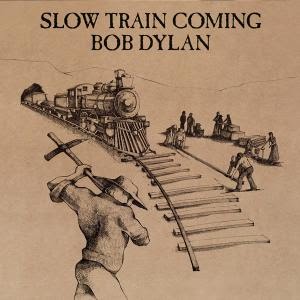 3. “Gotta Serve Somebody” (1979). I don’t know what’s harder to believe, that this nerve-touching, bluesy gospel anthem was almost left off Slow Train Coming or that it managed to make the Billboard top forty, peaking at the twenty-four spot during the same week that Robert John’s “Sad Eyes” hit Number One. I do know that it didn’t deserve the bitch slapping it got from John Lennon (“Serve Yourself”). First, the terms Dylan uses to describe every stratum of society are funny; second, you don’t even have to believe in God to accept the idea that every choice we make “serves” someone else’s better interests. (Lennon’s labors have certainly left Yoko Ono and his children better off.) Or you can simply switch “evil” for “devil” and “good” for “the Lord.” (Certainly, our more important decisions nudge the world a little in one direction or the other.) Third, although it has become common to regard Mark Knopfler or Jerry Wexler as Slow Train Coming’s musical savior, it’s Barry Beckett’s eerily low-key electric piano that distinguishes this song from anything else on Dylan’s four consecutive albums starting with S.
 4. “Get Your Rocks Off” (1967). A lot of the Big Pink tunes left off The Basement Tapes deserved to be. This ridiculously dirty ditty, however, did not. Perhaps the decision makers at Columbia thought it was too slow, but, really, if it were any faster, the punch line at the end of the refrain couldn't sneak up on you and Richard Manuel’s basso profundo “Get ’em off”s would get lost in the rush (as would Garth Hudson’s Labyrinthine Olympics organ runs). And the Manfred Mann’s Earth Band version on Messin’ gets its rocks back on. (For some reason, the lyrics aren’t posted at bobdylan.com. You can find them here: http://www.lyricstime.com/bob-dylan-get-your-rocks-off-lyrics.html.)
 5. “Got My Mind Made Up” (1986). Slight words, I’ll admit, but Tom Petty and the Heartbreakers’ loco-motorvatin’ Bo Diddley beat was Dylan’s most solid rock of the ’80s. And, actually, some of the words aren’t slight at all--especially stanzas four and five, which anyone who’s ever had his brain charmed away by some young lazy slut will swear are the essence of wit.
(Bob Dylan's Top-Five Songs Beginning with "F": http://arsenioorteza.blogspot.com/2010/08/bob-dylans-top-five-songs-beginning.html)