Showing posts with label 1996. Show all posts

Friday, July 23, 2010

Holy Barbarians: Cream (1996)

(As published in B-Side ... )

Holy Barbarian
Cream
(Reprise)


When last seen, Ian Astbury was leading a rapidly dwindling Cult cult into a psychedelic, heavy-metal wilderness from which he didn't seem likely to return any time soon. But miracles do happen, and if Cream, the debut outing from Astbury's new cult, Holy Barbarian, doesn't find Astbury completely back in touch with his roots, it still has moments of such down-and-dirty T. Rexiness that you'd swear the spirit of Marc Bolan had finally found a body suitable for possession. Chief among these moments is “Space Junkie,” a raunchy slice of sci-fi glam that owes as much to the Davids Johansen and Bowie as to Bolan. And there are others: the title cut, for instance, in which Astbury and his guitarist Patrick Sugg sing like all the young dudes, and “You Are There,” in which Astbury borrows the melody of “Like a Hurricane” for the chorus, swipes a line from Abba's “Does Your Mother Know” for the bridge, and makes some pretty awful lyrics tolerable for at least half of the song's five minutes. Alas, pretty awful lyrics have long been the bane of Astbury's songs, and “Bodhisattva” and “Opium” hit new lows with a thud. Don't be surprised, however, if this really takes off in non-English-speaking lands.

Saturday, July 17, 2010

Jason & the Scorchers: Drug-Store, Truck-Drivin' Band (1996)

(As published in the Illinois Entertainer ... )


Ask anyone who was there and intermittently sober enough to retain sensory impressions: During the video-mad mid-to-late 1980s, Jason & the Scorchers ruled the country-punk roost. Amid the proliferation of MTV-generated pop-music images--Boy George, Cyndi Lauper, Dee Snider, images that put the fantasy cart before the rock 'n' roll horse--Jason Ringenberg and the band he rode in on kicked up a musical dust storm.

When the dust had finally settled, the landscape not only looked different--suddenly, cowboy hats were hip--but it sounded different too. The barbed-wire essence of rock-and-roll that had run from Chuck Berry and the Stones all the way up through the Sex Pistols and the Clash survived yet another onslaught of style over substance, and the world had Jason & the Scorchers, at least in part, to thank.

Substance abuse, however, is no better than style abuse, and, looking back, it shouldn't have come as a great surprise to anyone familiar with the debilitating effects of wild living on rock 'n' rollers that Ringenberg's tour-van mates eventually became to burnt to scorch.

"In the old days," Ringenberg recalls, "those guys were wild, wild rock 'n' rollers. I mean, everything imaginable was happening out here, and that made it really difficult for me. I felt completely alone most of the time."

The reasons Ringenberg, who despite his wild-eyed-honky-tonk-singer persona "never was" a party animal, no longer feels alone are several. First, the original Scorchers--guitarist Warner Hodges, bassist Jeff Johnson, and drummer Perry Baggs--have overcome their wild ways and gotten serious about rocking as only men in full possession of their senses can. Second, Ringenberg has spent the last few years reconnecting with the Catholic faith of his youth, even going so far as to title his band's 1995 Mammoth Records debut A Blazing Grace and to include a quote from the 126th Psalm on the cover. Clear Impetuous Morning, their brand new album--and, according to Ringenberg, the "most country-rock 'n' roll record [they've] ever made"--wears its inspiration more subtly, but songs like "Victory Road" and "Kick Me Down" express nothing if not a desire to tap a higher power.

The third reason for Ringenberg's not feeling alone is that, according to him, there are more bands now than there ever were in the '80s who are saying it loud: They're country-punk and proud.

"I feel a kinship with a lot of these younger artists, artists like Son Volt, Wilco, the Bottle Rockets, and Slobberbone. In fact, Slobberbone will come right out and say that the Scorchers were their biggest influence.

"Back in the '80s," Ringenberg reflects, "we got into two crowds, almost three at the tail end of it. The first one was the Rank-&-File-Long- Ryders-Green-on-Red sort of scene. We were part of that for awhile. I guess you could even say we led it. Then the mid-'80s came around, and we were lumped in with people like the Georgia Satellites, the Fabulous Thunderbirds, and John Cougar Mellencamp. Then by the late '80s we'd almost become a hard-rock band. I mean, Jeff was actually living in L.A. and hanging out with Guns N' Roses."

Ringenberg laughs about it now. "The guys were wearing makeup and doing drugs. They were almost part of the L.A. rock scene for a while. It was really crazy. By the end of the '80s, I felt like the Lone Ranger. I had nothing in common with my own band let alone the music business. It was a very scary time for me."

It was also apparently a scary time for Hodges, Johnson, and Baggs, since it was during this period that they quit their lowdown ways.

"They're very talented people, very good people at heart," says Ringenberg, "and watching them reform their lives and get themselves together, I've come to respect them."

Longtime fans of the group, however, know that there is something that Jason & the Scorchers have never respected and probably never will, and that is the right of rock and pop songs made famous by other artists to remain "unScorched."

Indeed, it was the Scorchers' wildly revisionist, rip-snortin' run through of Bob Dylan's "Absolutely Sweet Marie" that first brought them to the attention of the world outside Nashville. Tacked onto their Praxis Records EP, Fervor, when it was re-released in '85 by EMI, it transformed a solid but subtle little record into the sort of attention-getter that some bands try for years to create.

Since then they've developed the "Scorched" cover song into a trademark, reaching new heights of audacity last year when they included a thundering rendition of John Denver's 1970 AM-folk ditty, "Take Me Home, Country Roads" on A Blazing Grace.

On Clear Impetuous Morning, they add the satirical Gram Parsons-Roger McGuinn song "Drugstore Truck Drivin' Man"--which Ringenberg calls an "anti-Nashville-music-business kind of song"--to their list of savaged classics. And as usual, the Scorchers version outrocks the original.

"We have a tradition of doing old, classic covers and putting our own stamp--or stomp--on them," Ringenberg chuckles, "but this time we didn't think we were going to do one, because we had a lot of good originals. Still, we demoed 'Drugstore Truck Drivin' Man,' which we've been playing live for awhile now, and it came out way beyond our expectations. We really hit a groove with it."

Unquestionably, a compilation that would collect all the Scorchers cover songs in one place has been long overdue for some time now, as has the CD re-release of their entire catalogue, a catalogue to which Mammoth almost secured the rights before EMI made it financially disadvantage for the indie label at the last minute.

"It was a bitter disappointment when that happened," Ringenberg admits, "because we came oh so close to getting the entire EMI catalogue. But it's still possible.

"Actually," he muses, "we're due for a live record. We've never done one, and it's getting to be that time. It would have to be really good though, because people have a lot of great memories of Scorchers shows. Our live record would have to smoke."

On the evidence of Clear Impetuous Morning, Ringenberg has nothing to fear. In fact, it's the anti-smoking crusaders who'd better watch out.


(More Ringenberg:
http://arsenioorteza.blogspot.com/search?q=Jason+Ringenberg)

Wednesday, July 14, 2010

DJ Shadow: Endtroducing..... (1996)

(As published in the Illinois Entertainer ... )

DJ Shadow
Endtroducing.....
(Mo Wax/Ffrr)

Since record companies don't seem to be in any hurry to quit cluttering the world with ambient, hip-hop collages assembled from DJs' vast collections of vinyl, one might as well learn to live with the damned things. As it turns out, Endtroducing--the debut collage from the latest all-the-rage sampler DJ Shadow--is pretty easy to live with. With the exception of a few rat-a-tat-tat explosions from drum machines set on "strafe," most of the results of Shadow's cutting and pasting induce an almost Windham Hill-like trance.

This is a particularly impressive trick in that, according to the liner notes, Windham Hill is practically the only label whose artists Shadow hasn't sampled. BMG, Welk, Island, Sony, Virgin, yes--but no George Winston, William Ackerman, or (DJ?) Shadowfax. Of course, getting ambiance by sampling Tangerine Dream ("Changeling"), one of the Virgin artists encrypted here, is no great accomplishment, but at least Shadow’s no Afrocentric elitist. White German prog-rock dinosaurs? Bring 'em on! This B-boy's world turns 360 degrees.

He has a sense of humor, too. He calls one song based on an organ sample "Organ Donor," and he calls one that has nothing to do with why hip-hop sucks in '96 "Why Hip Hop Sucks in '96." He also has a healthy disregard for words, almost none of which sully Endtroducing's thirteen tracks. Sooner or later, however, the disembodied ethereality of the results gives rise to the question of whether music comprised of nothing but manipulated samples actually makes for fun listening or merely makes pondering postmodern theories of the fragmentation of the self seem hipper than it is.

Tuesday, July 13, 2010

Nearly God: Nearly God (1996)

(As published in the Illinois Entertainer ... )

Nearly God
Nearly God
(Durban Poison/Island)

Talk about hype. This time last year Tricky was parlaying an acid-house, hip-hop pastiche called Maxinquaye into the number-one rock-critic album of the year. That he succeeded, however, says more about the herd mentality of rock critics than it does about the musical value of Tricky, which judging from Nearly God, his pseudonymous follow-up, is nil and getting niller. Not just hookless but tuneless, not just incoherent but comatose, it deserves nothing if not opprobrium.

Not that there aren’t interesting influences squirming in Tricky's murk: snuff-film soundtracks, obscene phone calls, phone sex, bad acid. In other words, lots of heavy breathing, ominous whispering, and orgasm-choked squeals smothered in distortion and set to rhythms best appreciated by those without motor skills. Still, Tricky is tricky. Just when you think none of these twelve "songs" will do anything but coagulate like a lava lamp, he adds "Black Coffee," a duet with Martina Topley Bird that, like the "Ice Ice Baby"/ "Under Pressure" riff it's built on, gets catchier with each listen. Then comes "Children's Story," a Martina Topley Bird rap that also gets catchier with each listen. Programmed between them, even "I Be the Prophet," which deconstructs an early-Eurythmics synth riff without killing it and serves as yet another Bird vehicle, ends up sounding pretty good.

Three out of twelve, however, seems stingy for a Next Big Thing's next big thing, and since Nearly God's only memorable line is a sample that goes "When they tell me that I'm stuck up / I just tell them shut the fuck up," the album seems arrogant, as well. Nearly God is the sound of Tricky giving us the finger. Pull it if you want, but don't say you weren't warned.

Monday, July 12, 2010

Cowboy Mouth: Are You with Me? (1996)

(As published in the Illinois Entertainer ... )

Cowboy Mouth
Are You with Me?
(MCA)


Longtime fans of Cowboy Mouth consider this album--the frenzied French Quarter foursome's first for MCA--something of a sellout. Gone, the fans say, is the Band-like versatility that having four lead singers lent Cowboy Mouth's earlier efforts, and they're right: At the behest of MCA, drummer Fred LeBlanc sings lead on over half the songs, and bassist Rob Savoy sings lead on none. Gone too, the fans complain, is the frenzy that has made Cowboy Mouth one of the biggest draws at New Orleans' annual Jazz and Heritage Festival.

That, however, is not entirely true. "Love of My Life," LeBlanc's manic farewell to a "shady lady" who "used to be calm but now [is] crazy," has frenzy aplenty, especially in the drumming, and "Jenny Says," about yet another girl who "went insane" (maybe it's the same one?), certainly herky-jerks its folk-rock melody around. Yet there's no denying that more non-herky-jerky folk-rock shows up here than fans familiar with the band's live incarnation might expect.

Some of it is pretty. "God Makes the Rain," "Take It Out on Me," and "Peacemaker," the latter of which surely constitutes the first pro-policeman pop song of the post-"Cop Killa" era, should score points with those whose obsession with all things unplugged has reactivated in them an appreciation for hummability, and John Thomas Griffith's retro-rocking "Man on the Run" should score points with fans of the Red Rockers.

Still, nothing on Are You with Me? would ever lead the uninitiated to suspect that LeBlanc has been known to climax Cowboy Mouth shows by running amok through the crowd, singing Aretha Franklin's "Respect" from beneath a trash can.

Ziggy Marley & the Melody Makers: Feel like We Want 2 B (1996)

(As published in the Illinois Entertainer ... )

Ziggy Marley & the Melody Makers
Feel like We Want 2 B
(Elektra)


You won’t find many folks, even among his core audience, claiming that Ziggy Marley makes great melodies. Like his father, Ziggy excels--when he excels--at linking evocative catch phrases to catchy riddims with a voice that sounds at home with both. On Feel like We Want 2 B, his voice sounds more at home with the riddims than with the rhymes. Whereas Bob Marley could make even the most oversimplified us-vs.-dem lyrics ring, Ziggy imbues lines like “Put all material wants behind today” with face value only. One song earlier, he complains that the “Black man” is only “free to be poor,” and eight songs later he complains that the G7 nations haven’t given enough money to Jamaica. So I guess Ziggy wants material wealth but only so he can voluntarily leave it behind and therefore achieve the blessedness that comes with poverty. This is known as having your cake and not eating it too. And Ziggy’s voice embodies the strain of the contradiction.

Saturday, July 10, 2010

Cindy Lee Berryhill: Straight Outta Marysville (1996)

(As published in B-Side ... )

Cindy Lee Berryhill
Straight Outta Marysville
(Earth/Cargo)


Like most fourteen-song CDs, this follow-up to Berryhill's '94 breakthrough Garage Orchestra goes on too long. But, also like most fourteen-song CDs, it can also be edited with a programing button. The songs to skip are the ones that sound forced: “The Virtues of Being Apricot” and “Talkin' with a Mineral” come off gratuitously flakey, and “Elvis of Maryville” and Donovan's “Season of the Witch” do little with their evocation of rock iconography. Only when Berryhill anchors her writing in verbal or musical hooks does she avoid drowning in quasi-Dylanisms ("Picasso's in the living room playing with the baby boom") or floating off with her helium-filled voice; with such anchors deployed, she scores big. Vibraphone and cello elevate “Unwritten Love Song” into twilight time, sheer verbal energy strips the empathetic “Just like Me” of pretense, and a happy religious fatalism turns “Unknown Master Painter” into a livelier piece of Deistic folk-rock than either “From a Distance” or “One of Us.” Then there's the truly oddball “Diane,” Berryhill's confession of love for a girl who used to be a guy or vice versa. (It's unclear what the doctors have "turned inside out.")

Penelope Houston: Cut You (1996)

(As published in B-Side ... )

Penelope Houston
Cut You
(Reprise)


Nearly twenty years after she came and went as the leader of San Francisco's punk Avengers, Penelope Houston is back with an album that's part sampler (eight re-recorded songs from her recent Europe-only releases), part new EP (six new ones), and only a little too long for all that. Not that the credits say what's new and what's old. So whether she's a slowly maturing folky with an unusual affinity for distilling her internationally acquired influences into a potent brew (as the mandolin-enriched “Secret Sign,” “Sweetheart,” “Scratch,” “Locket,” and “Harry Dean” would indicate) or whether she's a slowly deliquescing singer-songwriter who can't quite bring herself to call it quits (as the wordy and amelodic “Fuzzy Throne,” “Pull,” and title cut would indicate) is impossible to tell. Meanwhile, punk hasn’t disappeared entirely from her program. On both “Ride” and “Glad I'm a Girl,” she recalls Debbie Harry without tripping nostalgia alarms. But since when do purveyors of feminist punk-pop anthems call themselves "girls" in the first place? Apparently since they first realized that career longevity sometimes involves the gradual working out of contradictions over a long period of time.

Chune: Big Hat, No Cattle (1996)

(As published in B-Side ... )

Chune
Big Hat, No Cattle
(Cargo/Headhunter)

This disc has only six songs, but don't figure it for an E.P., not when all six keep going and going (and going). Sometimes you'll think one's over, but then it's final chord will take forever to fade, or its final drum crash will keep rolling only to peter out a minute or two later. The song titles, on the other hand, are over really fast: “Dated and Jaded,” “Water Sandwich,” “Fishwrap,” “One-Man Dream Machine,” “Playboys and Tourniquets,” and--my favorite--“Duel Rectums” (good thing they didn't call it “Dueling Rectums”). What makes the disc tolerable-to-enjoyable on the whole is that Andy Harris sings with the ravaged-but-unbowed enthusiasm and skill of a displaced pop singer. Stick him in front of a tight combo, throw in background singers and maybe a producer, and who knows? He might even get invited to sing at Sinatra's 90th. For now, however, the sloppiness of his three Chunemates betokens fatigue and sloppiness-for-its-own-sake instead of the youthful rebelliousness it was undoubtedly supposed to. Or, to put it another way, at such exhausted tempos and never-ending lengths, each song sounds as if it were supposed to be the last song on the album. And, of course, only one of them can be.

Thursday, July 8, 2010

BR5-49: Hyphenation Blues (1996)

(As published in the Illinois Entertainer ... )

Few people who watched Hee Haw will ever forget it.


Even if they want to.

From the pickin' and grinnin' of Buck Owens and Roy Clark to the halter tops and daisy dukes of Barbi Benton, the show both spoofed and celebrated below-the-Bible-belt Southern culture so shamelessly that even now one can hardly hear the name "Minnie Pearl" without wanting to cast swine.

In the case of the Grammy-nominated, countrybilly act known as BR5-49, however, the operative Hee Haw name is " Junior Samples." As fans of the show may remember, "BR5-49" was the phone number on the sign that Samples held while pitching used-car bargains from his junkyard. Or was it?

"Well, no," chuckles Smilin' Jay McDowell, the group's bassist. "That's not exactly the way Junior held it up. His sign said 'BR-549.' We're BR5-49. So we're not completely historically correct."

A misplaced hyphen may not seem like a big deal in these post-literate times, but for a quintet as committed to the accurate detail as BR5-49 is--their sound and look hit many nostalgic Nashville nails squarely on the head--the mistake is out of character.

The story behind it goes like this: While playing for tips at a club called Robert's Western World on Nashville's Lower Broadway, the then-anonymous group began attracting large and diverse crowds with an enthusiastically delivered repertoire of classic country songs. Eventually, the group attracted a truck driver with walking-around money.

"This happened before I joined the group," McDowell explains, "but this truck driver came through town, saw them play, and gave them a fifty-dollar tip on the condition that they make posters and advertise with it. So that necessitated coming up with a name.

“Well, one day, a regular at Robert's named Louie was telling a story about a time he was in another bar there called Tootsie's. He had two girls at his table, and Junior Samples walked in and said, 'Louie, that ain't fair! You got two girls, and I ain't got nairn!' Then somebody said, "Hey, remember? He used to say, 'Just call BR-549,' and the guys said, 'That has to be the name!'

“But they didn't remember where the hyphen went, so when they made the posters, they had it in a different place than Junior did."

Newly christened, the combo began attracting more attention. Major labels came knocking, too, with the promise of even more fast fame in exchange for the group's five signatures on five dotted lines. McDowell--whose facility with the upright bass had earned him a place in the group by then--remembers those exciting yet perilous days well.

"We had to turn down a couple of labels that were really interested because they showed signs of wanting to change the band: 'O.K., we just have to add a keyboard player and horns.' Others were saying, 'We can't have you play on the record. We'll hire people to come in and knock it out real quick.' That was another thing that made us say, 'Thank you for your time.'"

McDowell laughs--they don't call him "Smilin' Jay" for nothing--because the story has a happy ending. Arista Nashville, aware of the outfit's local appeal, vowed not to fix what wasn't broke, and so far it hasn't.

The album BR5-49 appeared last September, and its infectious combination of classic C&W (Johnny Horton's "Cherokee Boogie," Webb Pierce's "I Ain't Never") and genre-friendly originals (the country-is-better-than-punk "Little Ramona" and the situational-ethics-are-better-than-none "Even If It's Wrong") has so far resulted in a Grammy nomination for "Best Country Group or Duo" (McDowell sat next to Buddy Holly's widow, Maria Elena, at the awards) and sold-out club shows from coast-to-coast and around the world.

"We've played Chicago several times," recalls McDowell. "The first time we played a little place called Fitzgerald's, another time we opened for the Black Crowes at the Navy Pier, and the last time we played two nights at Schuba's, which is a nice little room. The shows sold out immediately, and they added a third show. It was really fun, but it was a shame we weren't playing a bigger place because we could've filled one that night."

As the prospect of filling bigger places looms, the larger picture begins coming into focus. Because Arista has released BR5-49 not only here but also abroad, McDowell and his buddies have become de facto Hee Haw ambassadors to the world.

"We've even played in Europe and Japan," says McDowell, "and the Europeans and the Japanese eat it up, the style of music we do. When I learned they had no idea what Hee Haw was, I thought, 'This is never going to work.' But it seems that our name piques their interest, especially of the people who know country and rockabilly.

“When they find out there was a show they've never heard of that ran for twenty years and that featured that music, they want to know more about it. Now we get letters from all over the world from people who've gotten tapes of Hee Haw from America.

"I'm very proud to be spreading that whole thing."

Wednesday, July 7, 2010

Soul Coughing: Nonsense and Sensibility (1996)

(As published in the Illinois Entertainer ... )

M. Doughty, the sandpaper-voiced lead singer of the New York quartet known as Soul Coughing, is happy with where his band currently finds itself.

Signed to Slash Records (the launching pad of such vitally American, ear-to-the-tracks bands as X, Los Lobos, and the Blasters), hand-picked by Dave Matthews himself to open shows on the East Coast leg of his band's current tour, and featured on the top-selling X-Files soundtrack, Songs in the Key of X, Soul Coughing has made the transition from the underground to the overground in record time.


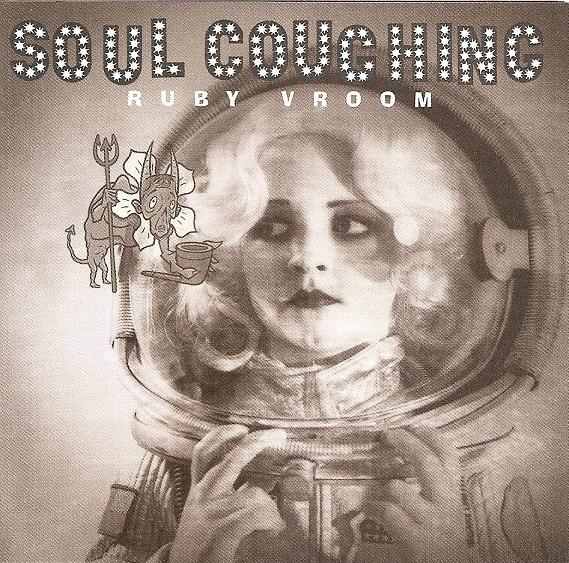
Make that CD time. Sales of the band's recently released longplayer, Irresistible Bliss, have already equaled the sales of Ruby Vroom, their 1994 debut. And unlike some left-of-center band leaders, Doughty loses no sleep over selling out.

"No, no, no. That's bullshit," he laughs. "I want the dosh--the money--as much as anybody else. To these indie-rock bands that talk about how they're going to stay independent and true to themselves, I say, 'Gee, you seem to be playing a vintage Fender Mustang. Where exactly did that come from?' As long as the money comes from Mom, I guess it's all right, but not from the evil behemoth of the recording industry!"

Doughty's view of filthy lucre is as straightforward as the music that he, Mark De Gli Antoni (keyboard sampler), Sebastian Steinberg (upright bass or "bull fiddle"), and Yuval Gabay (drums) make. With the exception of an occasional sample or overdub, Soul Coughing generates its swinging, seismic rumble live in the studio. This stripped-down approach makes them unique among the small but growing crowd of post-Beastie Boys groove diggers intent on keeping the hip-hop vibe alive in non-hip-hop contexts.

It also allows them to make the most of that most precious up-and-coming-band commodity: studio time. No sooner, for instance, had they arranged for the Halo Benders' Steve Fisk to produce their Songs in the Key of X contribution ("Unmarked Helicopters") than they found themselves with enough time on their hands to get the songs "White Girl" and "4 Out of 5"--both of which ended up on Irresistible Bliss--on tape, as well.

"I talked to him on the phone," Doughty recalls, "and he said, 'I booked three days in the studio for us to do this song.' I said, 'You mean to track and mix, right?' He said, 'No, just to track.' I said, 'Dude, we'll get this done in, like, an hour!' But he said, 'No, I think we'd better play it safe. Three days.' We got there and finished the song in, like, two takes, so we thought, 'O.K., maybe we should use this extra studio time."

Like Ruby Vroom's "Casiotone Nation," "4 Out of 5" takes math equations and turns them into song lyrics. In "Casiotone Nation" Doughty made a chorus out of counting by five's to one hundred; in "4 Out of 5" he makes skewed romance metaphors out of basic addition and multiplication drills.


"That's the Schoolhouse Rock/Dr. Seuss influence coming through," laughs Doughty. "I love the way jargon sounds. Scientific words, mathematics words, algebraic words--it's more the texture than the actual equations." In other words, as their name alone suggests, Soul Coughing is not afraid to risk nonsense in their search for the perfect, emotionally resonant vibe. Or as Doughty told a Warner publicist not long ago, "I see Soul Coughing as this sort of V.U. meter with Heartbreak on the left and Nonsense on the right."

The nonsense--what with the jargon-mad lyrics on top and the soulfully coughing grooves beneath--is obvious. But heartbreak? "At heart every Soul Coughing song is a love song," Doughty explains. "Even '4 Out of 5': 'Her knees thrust in one direction like a symbol of math, / a symbol meaning greater than, / I come recommended by four out of five'--it's a come-on. But I always veer into this skittish use of language. The nature of my attention span is such that after four love-song lines, I start thinking, 'All right, let's get back to the non-sense again.'"

In composing songs for Irresistible Bliss, the combo found a kindred spirit in the late Raymond Scott, the composer who developed a "skittish" blend of Big Band and jazz in the 1930s and '40s that would cause people to refer to him ever after as "that cartoon-music guy." So closely did Doughty and the boys identify with Scott that they built one song, "Disseminated," around Scott's "The Penguin," even going so far as to give him co-composer credit.
"He was just an incredibly loopy composer," explains Doughty. "His stuff is so skittish. It just jaunts around. He was like a weird Duke Ellington in a way."

And Soul Coughing is like a weird Raymond Scott in a way. So it goes.


Whether the band will ever end up supplying the soundtracks to hundreds of cartoons, films, and TV shows and thus influencing generations of children of all ages remains to be seen.

That people--Dave Matthews included--are finding Soul Coughing's bliss more irresistible than ever does not.

Sunday, July 4, 2010

Salt: Auscultate (1996)

(As published in B-Side ... )

SALT
Auscultate (Island)


Fresh from Stockholm but apparently not fans of Abba, this two-man, one-woman trio bashes out two-chord anthems in minor keys and at full volume, sounding at their dullest like P.J. Harvey backed by Candlebox and at their sharpest like P.J. Harvey backed by Nirvana. Actually, they're at their best on “So,” in which they let up a little and allow for both a prominent acoustic guitar and a pretty chorus. They're at their second best on “Bluster,” which starts out like just another two-chord, minor-key excursion and ends up incorporating an impressively medieval, Led Zeppelin-like bridge. It doesn't actually lead anywhere, but its incongruity makes it the perfect analogue for the lyrics, which also don't lead anywhere because they were written by the lead-singing Nina Ramsby, for whom English is a second language. Sometimes her jumbled syntax results in happy accidents ("Don't want to / Don't want to / Be inert / Inert"). Her foreigner's articulation, however, is another matter. I mean, does anyone have the heart to tell her that eagerness--as in "Got to keep my eagerness inside me"--is not pronounced anus?

Ammonia: Mint 400 (1996)

(As published in B-Side ... )

AMMONIA
Mint 400 (Murmur)

Once in a while, one should reflect upon the fact that not only have way too many rock albums been made since the beginning of time--when was the last time you dirtied your digits fingering endless racks of classical cut-outs?--but also that way too many rock albums get made every year. Ammonia give rise to such reflections not because their retooled heavy metal has no appeal--when was the last time you listened to an album of retooled heavy metal with no appeal (except for Candlebox, I mean)?--but because bands should only retool heavy metal if they have improvements to make. Instead of improvements, this trio from the land of Silverchair putty over the contours of their streamlined hooks until nothing sharp or prickly remains. "Ah," you argue, "but Ammonia aren't heavy-metal. They're alternative." And if by "alternative" you mean "sloppy metal," you're right. But once in a while, you should reflect upon the fact that way too many sloppy-metal albums get made these days, and then upon the fact that not even after a month of regular exposure to these twelve songs can you remember how one of them goes.

Saturday, July 3, 2010

Wasted Time: When It Was Fun (1996)

(As published in the Illinois Entertainer ... )

Wasted Time
When It Was Fun
(Grass)


Chris, Bunky, and Craig--the three Long Island punksters who comprise Wasted Time--have yet to reach the legal drinking age, and although statistics suggest they've probably gotten drunk a few dozen times by now anyway, their music doesn't show it. It shows instead the benefits of digging, as these boys admit to having done, "typical '80s metal" before digging "East-Bay punk"--of honing one's hook craft, in other words, on Def Leppard and Poison before going for the metallic K.O. with nothing but overcranked amps. As a result, big crisply pounded-out hooks abound. "Graduation," "Heathcliff," "Bachelor #1," "Thursday," and the instant classic "Shut Up!!" get the disc off to such a rip-roaring start that even their all-ages punk version of Van Morrison's "Brown-Eyed Girl" (well-placed "Oi!" and all) sounds earned rather than capricious. Of course, round about tracks ten, eleven, twelve, and thirteen, the album’s title begins to sound like a reference to tracks one through nine, after which the producer probably should've drawn the line and thus preserved this raucous debut in a more fat-free form.

Adrian Borland: Cinematic (1996)

(As published in the Illinois Entertainer ... )

Adrian Borland
Cinematic
(Setanta)

Adrian Borland is that rarest of twofers: an English musician who's unknown in the States but shouldn’t be and a two-decade, four-band, indie-label apprentice who's currently recording the freshest music of his career. The brightest of Cinematic's fifteen tracks (too many, of course, but what else is new?) is "Bright White Light." "The sun doesn't shine here,” sings Borland. “It just signifies the day. / We take this life for granted, / and we throw this world away." Almost worthy of Emily Dickinson, no? (The chorus--"At the heart of destruction lies the soul of discontent, / and a bright, white light will blind you in the end"--is certainly worthy of Italo Svevo.) “Night Cascade” follows the same formula, to wit: meter, metaphysics, and metaphor peacefully coexisting within hooks so simple anyone can think them up.

Unfortunately, the same can’t be said of the other thirteen songs. Despite Borland's uniformly unpretentious singing and the occasional glint of another prime hook or insight (the title track, "Long Dark Train," and "I Can't Stop The World" have a few of both), Borland never again strikes the perfect balance of flesh and spirit that a mature audience expects from those who would attempt such a balance in the first place. All of which means that Borland spends a lot of Cinematic sounding as half-lost-half-found as the rest of us and the other third sounding as if the condition is both no big deal and a really big deal indeed.

Friday, July 2, 2010

Mekons/Kathy Acker: Pussy, King of the Pirates (1996)

(As published in B-Side ... )

MEKONS/KATHY ACKER
Pussy, King of the Pirates (Quarterstick)

For nearly twenty years, both Kathy Acker and the Mekons have hammered away at civilization-as-we-know-it, Acker with her incendiary prose, the Mekons with their punk-inflected country-rock. So why does Pussy, King of the Pirates--the "soundtrack" to Acker's new novel of the same name--sound less like a marriage made in heaven than a drunken one-night stand between strangers who'll hate themselves for it in the morning? Maybe because novels, not even ones full of lesbian pirates who like saying "cunt," don't translate well to thirty-eight-minute CDs. Or maybe because the Mekons sound better when making like rock-and-roll anarchists than they do when parodying show tunes and singing "The moon equals cracks / in my cunt" ("Ange's Song As She Crawled Through London"), "Those Oxford monks, / fingers up her cunt, / instructed her ..." ("The Song of the Dogs"), and "May my cunt come out again. / May my cunt be wild" ("Antigone Speaking About Herself"). True, "Antigone Speaks" packs some of the rockingest electro drums the Mekons have ever used, and the gorgeous "My Song of Night" floats past like a number-nine dream. But both the Mekons and Acker (who shows up here as a narrator) have done better.

John Barry: The EMI Years / The Sound Gallery (1996)

(As published in B-Side ... )

JOHN BARRY
The EMI Years Volumes One and Two (Scamp)

VARIOUS ARTISTS
The Sound Gallery Volume One (Scamp)

Knowing the susceptibility of the self-consciously hip to reactionary shopping impulses, one mustn't take the sudden popularity of lowbrow instrumental mood music (cf. Martin Denny) as proof positive that taste no longer matters. It does. But neither should one mistake tasteless instrumental mood music for bad instrumental mood music. Take Scamp's collections of the music John Barry made for EMI in the late-'50s, for instance. Although many of Volume One's thirty-seven (thirty-seven!) and Volume Two's twenty-eight (twenty-eight!) tracks amount to little more than a white man's awkward attempt to shift his musical burden to blinkered British bobbysoxers, another chunk of it traces the development of the menacingly stuttering guitar of Barry's most famous work--"The James Bond Theme" (alas, not included here)--to its very entertaining roots in good-natured showmanship. His "Walk Don't Run" even rivals the Ventures'.

And although on the surface The Sound Gallery Volume One, a collection of British incidental soundtrack music recorded between '67 and '75, sounds different, its appeal--which on many of its twenty-four (twenty-four!) tracks is immense--relies on the same phenomenon as Barry's: that of an intense, lively, and dramatic virtuosity evolving from what was really nothing more than an intention to divert.

Monday, June 28, 2010

Reverend Horton Heat: Highway to Hell! (1996)

(As published in the Illinois Entertainer ... )

Jim Horton Heath--a.k.a. the Reverend Horton Heat--has never been officially ordained, but that hasn't stopped him from attracting a fanatical flock during the course of his many circuit rides throughout America's rock-and-roll clubland. Armed with nothing but a guitar and more rockabilly fervor than you can shake a pompadour at, he and his rhythm section have spent the '90s preaching to the lost and helping them stay that way.

"I can't imagine what it would be like to be a real reverend," Heath chuckles. "To have to write a sermon every week!"

One look at the titles of the Texan's most recent songs explains why he'd consider the task of sermon preparation daunting. After all, what would even the most liberal churchgoer make of sermons with names like "Baddest of the Bad," "Liquor, Beer, and Wine," "It's Martini Time," and "Big Bad Rocket of Love," especially when the man delivering them would as soon show up wearing an AC/DC T-shirt as a suit and tie?

"AC/DC," muses Heath. "Now that's a fuckin' rock band, there."

So is Heath's trio. Despite the fears of some that It's Martini Time, the Reverend's new Interscope album, might not put the pedal to the heavy metal the way his 1994, Al Jourgensen-produced Liquor in the Front did, new songs such as the Ramones-like "Generation Why," the Nick Lowe-by-way-of-New York Dolls "Now, Right Now," and the aforementioned Billy Zoom-worthy "Big Bad Rocket of Love" definitely leave skidmarks on the good intentions with which the road to post-Stray Cats rockabilly hell is paved.

Or, to put it another way, by turning up the heat on rock 'n' roll's past, Heath and Co. cause a musical grease fire that, along with the Reverend's brimstoned singing style, puts a revival fervor in his ministry that even Al Jourgensen--Mr. Ministry himself--couldn't quite match.

Surprisingly, Heath, whose offstage manner is far less inflammatory than his onstage one, has a more sober view of It's Martini Time. "I think we went a little bit back to novelty on this one," he observes. "'Cowboy Love,' 'It's Martini Time,' and 'That's Showbiz' are all basically novelty songs."

Speaking of "Cowboy Love," the track most likely to provoke sociological discussion wherever the new album is played, one should point out that while it isn't the first recorded song about homosexual cowboys--Ned Sublette's classic "Cowboys Are Frequently Secretly" lays claim to that honor--it certainly deserves an honored place in the canon.

"We have a lot of cowboys here in Texas, and some of 'em are gay cowboys," laughs Heath. "Since there are gay country-and-western clubs both here and all over America, I thought it was a scene that should be documented, especially after what happened to Jimbo [Wallace], our bass player, and one of our sound guys in Fresno."


What did happen?

"They got a cab, and they told the driver to take 'em to a bar that was popular and happenin' and had a lot of cars. He said, 'Well, there's this one country-and-western bar,' and Jimbo and the sound guy said, 'O.K., let's go there.' Well, they went in there, ordered a beer, and looked around, but they didn't figure out they were in a gay country-and-western bar until they saw a black cowboy french kissing a white cowboy."

Heath laughs again. "They need their own songs, you know? And they gotta be real country songs, too. More than anything, that song makes fun of being white trash. In the way I sing and the way I deliver the song, I'm really makin' fun of myself."

Not that Heath is all self-deprecation and comedy. "That's Showbiz," far from towing the narrow novelty-rock line, is a bitter, deadpan, beat-style recitation a la Tom Waits and T Bone Burnett that excoriates not only show business but also the "little people who spit-shine and polish [his] long and jagged trail to the top." As the last of It's Martini Time's fourteen tracks, it doesn't end the album on a downer so much as provide the more fanciful numbers with a context in which they take on a significance greater than the sum of their parts.

Like any good rock 'n' roll album, however, It's Martini Time's parts are pretty impressive on their own. "We always have at least two good rock 'n' roll beats on our albums," Heath explains, "and what I call a rock 'n' roll beat is a fast four-four, like Jerry Lee Lewis's 'Great Balls of Fire' or 'Whole Lotta Rosie' by AC/DC. We have three fast rock 'n' roll songs on this new album. Then we have a slow rock beat. Then we'll do a fast swing and a medium swing, or sometimes we'll do two fast swings. Funny, but if you take the four-four really fast, it's called bluegrass. If it's a little slower, it's called speed metal."

Songs like (the non-gospel) "Time to Pray" and the Reverend's cover of Bill Haley's 1951 "Rock the Joint" embody his knack for bridging bluegrass and speed metal particularly well, the latter coming complete with Heath's note-perfect performance of Haley's famous "Rock Around the Clock" guitar solo. It is, according to Heath, a solo that was years in the works.

"The first band I was ever in was this '50s band that had these two really talented brothers. I was the guitar player, but when we did 'Rock Around the Clock,' I'd sit on the sidelines because one of the brothers could play that solo and I couldn't. He'd play it, and I'd be sitting there thinking, 'I'm gonna learn that solo if it kills me.'"

Obviously, Heath survived. He has also managed, so far, to survive his far more lethal and well-publicized substance abuse. "I tell you what: coke and heroin are tour enders. You can do coke, do a great gig, have a good time, and get in the van and start drivin' to the next city, but when you get there, you're not worth a shit the next day. I'm not even supposed to be drinkin' anymore because when I get drunk, I can really get out of hand and make everybody's job a lot more painful. I've just come around to seeing that gettin' drunk isn't the coolest thing I can do."

Noble thoughts, and one wishes the good Reverend the best, but his new album is called It's Martini Time, a title that gives rise to the question, "When, if ever, is it not martini time?"

"Just about any time is martini time," Heath laughs. "I've had 'em for lunch. I've had 'em for dinner. I like mine with a twist of lemon, straight up, but you've gotta shake it real good to where it's got that layer of ice on the top. That's what I really like."

"I've never had 'em for breakfast though," he says. "A martini breakfast -- I've never done that."

Tiny Tim with Brave Combo: Girl (1996)

(As published in Real Groove ... )

Tiny Tim with Brave Combo
Girl (Rounder)

Here we have fourteen songs that represent not only the first significant recording in years by that paragon of peculiarity, Tiny Tim, but also Mr. Tim's genius for never having met a song he didn't like. The liner notes call him "a living treasury of romance and music," and the eclectic tracklist supports the description. Beatle tunes ("Girl," "Hey Jude"), pop standards ("New York, New York," "Over the Rainbow," "Bye Bye Blackbird"), and flat-out corn ("Sly Cigarette," "I Believe in Tomorrow") follow one upon the other, linked by Mr. Tim's vibrato-heavy baritone--at sixty-something, he seldom summons his famous falsetto--and Brave Combo, the Grammy-nominated sextet known for its ability to master everything from polka to Oriental folk. The tight, lively playing keeps Girl from sheer novelty, providing the often campy songs with a solid musical grounding and tempering Mr. Tim's more unnerving vocal eccentricities. Not that a tempered Tiny Tim isn't plenty eccentric already, but with Brave Combo he seems less like a sideshow attraction and more like a well-preserved escapee from a time capsule sealed in the days of minstrel shows (if minstrels had done "Stairway to Heaven").

Los Lobos: Colossal Head (1996)

(As published in the Illinois Entertainer ... )

Los Lobos
Colossal Head
(Warner Bros.)

For this album's first five songs, Los Lobos rummage through their bag of time-tested east-L.A. rhythms and riffs, tweaking it a little here (the eerily detached narrator of "Everybody Loves a Train"), relaxing it a little there (the loose-limbed funk of "Revolution"), and filtering it all through an unusually murky mix that emphasizes both Conrad Lozano's bass and Steve Berlin's down-and-dirty sax. Then everything gets weird. "Life Is Good" pays tribute to la vida buena so lazily that it sounds as if the band recorded it after a big meal and ten minutes past siesta time, and what follows that sounds like the music they dreamed about after they nodded off. From the good-timey, War-like "Little Japan" and the metaphysically acute but equally slow-motion "Manny's Bones" to the not-so-metaphysically acute but equally slow motion title track and "This Bird's Gonna Fly," the music grinds on so sluggishly, sleepily, sensuously, and shamblingly that it's all the fellas can do to get through the disc-ending instrumental "Buddy Ebsen Loves the Night Time" without falling apart altogether. The odd thing is, you can't really call this somnambulant suite unpleasant--just strange. Or maybe "unfocused," except unfocused albums aren't supposed to be any fun, and this one is fun as only deconstructivist barrio jukebox music can be. You don't suppose Los Lobos could've gotten their "reified" and "refried" beans confused, do you?