Showing posts with label zydeco. Show all posts

Friday, July 9, 2010

Buckwheat Zydeco: Don't Stop Thinkin' About Tomorrow

(As published in Offbeat ... )


Of all the mementos in the Carencro, Louisiana, office of Stanley “Buckwheat” Dural, Jr., none testify to his success as the leader and personification of Buckwheat Zydeco more eloquently than the wall he’s covered with photos of himself and the famous people he’s met and performed with: Eric Clapton, Fats Domino, Albert Collins, Ed Bradley--“The 60-Minute man,” cracks Dural--and Stevie Wonder.

On this afternoon in late March, however, one photo in particular grabs Dural’s attention. “You know who that is?” he asks pointing at a photo of himself and a dapperly attired gentleman. “That’s Roger Troutman.” Troutman--a.k.a., Roger-- was the pioneering funk musician-composer-producer best known for his hits with the group Zapp and for making the vocoder an integral part of contemporary black music.

He was also shot to death by his brother and former band member Larry Troutman on April 25, 1999, not long after the photo of him and Dural was taken. “By his brother,” muses Dural. “Can you believe that?”

The Troutman affair has special meaning for Dural, who later this evening will listen for the first time to what he hopes will be the next release on his own Tomorrow Recordings, an as-yet-untitled solo album by Chris Ardoin’s former Double Clutchin’ drummer, creative foil, and older brother, Sean. “Sean’s a good musician,” says Dural, “and Chris is real good too. They’re good together or by themselves.”

Dural admits, however, that the splitting of the brothers as a creative and performing duo is a shame, the zydeco equivalent of such notoriously counterproductive rock and roll sibling rivalries as Phil and Don Everly’s and Ray and Dave Davies’. “It’s so nice,” he adds wistfully, “when you can work together.”

At fifty-three, Dural knows a lot about working together--so much, in fact, that if universities gave credit for coalition building and teamwork, he’d probably have a Ph.D. Ask him, for instance, to explain his rapid rise to the top of the post-Clifton Chenier zydeco heap and how he’s maintained that success for so long, and he’ll cite the time in the mid-’80’s when he convinced a New York-based author named Ted Fox to put his writing aside and to take up managing Buckwheat Zydeco full time.

Ask him how he has managed to keep Tomorrow Recordings going in an age of indie-record-company attrition, and he’ll cite the interrelated contributions of his label’s various publicists (only one of which lives in Louisiana). True, nothing gets done without his approval, but he gives his approval to quite a bit because he has surrounded himself with people he trusts, people who understand that Tomorrow represents a roots-conscious, artist-friendly alternative to the major labels--and that its ultimate success will be determined by the degree to which it stays true to its ideals.

“Island Records was great,” says Dural of the label for which he recorded intermittently between 1987 and 1994. “All those companies were great, but those were giants, man. I was like a needle in a haystack.” And the worst consequence of being a needle, Dural discovered, was that his albums were often invisible in cities where his live act was doing some serious throwing down.

It’s a situation he chalks up to the promotional laziness inevitable in labels that have the sales of an act like U2 to fall back upon.

“You’ve got twenty other artists with income galore coming in already, and then you’ve got to stop and worry about me that ain’t started with the income yet? That’s what I mean when by ‘lost in the shuffle,’ man, and that’s no good for me, because my music’s too important for me to settle for that. I’d prefer to be heard and not make a dime than not being heard and still not making nothing.”

To keep from perpetuating the cycle of negligence himself, Dural has kept Tomorrow’s commitments to a minimum. To date, the only non-Buckwheat Zydeco album to bear the label’s imprint has been Lil’ Brian and the Zydeco Travelers’ extremely well-received Funky Nation. But Dural intends to unearth more music--he has a drawer full of demo tapes from up-and-comers hoping to catch his ear--and not just zydeco either.

“I’m ready to work with people that can invent, that have talent, talent that’s not heard yet and that don’t know how far that talent can go. That’s what’s fun about this company. You’ve got people out there that no one’s never heard of, people who are good musicians. They’re just not discovered. It’s not always artists that have to go looking for a company. Companies have to look for artists too.

“When we started this company,” says Dural, “I had a meeting for southwest Louisiana musicians, and I said, ‘This is what’s getting ready to happen. This is the invite. If you have anything to offer, give me a ring here in Louisiana or call Ted Fox in New York, and we’ll see if there’s something appropriate to work with.’ Everything started coming in.”

Talent scout, producer, and entrepreneur--Dural clearly relishes the new hats his Tomorrow duties require him to wear.

But even though those duties haven’t cut into his touring schedule (he still averages over two hundred shows a year), some of his fans have begun to wonder whether they’ve cut into his songwriting. As of the end of last year, there’d been three Buckwheat Zydeco albums since the release of Trouble, his last studio album, in 1997. But two were compilations (The Buckwheat Zydeco Story: A 20-Year Party [Tomorrow], Ultimate Collection [Hip-O]) and another was Trouble again, albeit re-released, this time with the Tomorrow logo where the Mesa/Atlantic logo used to be.

Dural, on the other hand, who has often spoken of his songs as coming to instead of from him, considers his present fallow period just one more fringe benefit of being his own boss. There is, in other words, no pressure to meet deadlines or deliver product, and as a result he’s free to concentrate on projects like the just-released Down Home Live! album (about which more in a moment) and “All the King’s Men,” the Clifton Chenier tribute that will take place under Dural’s direction later this month at Lafayette, Louisiana's Festival International. The seventy-five-minute set will unite such former Clifton Chenier band members as Dural, John Hart, and Robert Alexander on-stage for the first time in years.

But as excited as Dural is about the reunion angle of the set, he’s also acutely aware of the “King’s Men” who’ll be conspicuous by their absence: Cleveland Chenier (“He’s deceased too”), Joseph Morris (“Joe’s in a home”), and, of course, the King himself. “I wish he was here to see these good things happening, you know? He’s no different than the football players that came out a long time ago and opened the gates for football players today who make seventeen million dollars a year. You talk about seventeen million dollars--they won’t even accept it! ‘Seventeen-million dollars a year? I don’t want that!’”

They don’t want it, says Dural, because their motivation isn’t the love of money but the love of music--just like the motivation of the guys in his band. “They take the music very seriously,” Dural explains. “You’ve got to understand, that’s what these cats do all their lives.”

Anyone who doesn’t understand should check out Down Home Live!, a seventy-two-minute document of Buckwheat Zydeco’s performance last Thanksgiving at El Sid O’s, the Lafayette zydeco-and-blues club run by Nathan Williams’ brother Sid.

Although a glance at the song list might cause those familiar with Dural’s songbook to wonder whether they really need another version of “What You Gonna Do?,” “Beast of Burden,” “Hard to Stop,” or “Make a Change,” a glance at the song lengths, which average eight minutes and change, should erase their doubts: Seldom have extended workouts revealed so much about the depths of what’s allegedly a simple, blues-based, rural folk music.

“That’s how come I like to play everything,” says Dural. “People say, ‘Buckwheat, where are you going with this music?’ I say, ‘I don’t know, man. I just take it as far as I can, with no limits except keeping it home, keeping it to the roots, and keeping it to the culture.’

“El Sid O says, ‘You wonder where you’re going, just don’t forget where you come from.’

“That," says Dural, "is reality.”

Thursday, July 8, 2010

Zydeco: The Essential Collection (2003)

(As published in the Times of Acadiana ... )

Zydeco: The Essential Collection
(Rounder Heritage Series)

In case you don’t know, the loose talk among Louisiana-music fans with their ears to the ground is that Creole accordion music as we’ve always known it is in a bad way. No good new albums of that stripe since the deaths of Boozoo and Beau Jocque, they say. Not even many bad ones of that stripe since the deaths of Boozoo and Beau Jocque, I’ll add. And the recording dates on the material enshrined on this typically non-essential essential compilation (thirteen out of seventeen pre-’99) confirm the diagnosis. Still, if indeed the end is near, the herein anthologized music of Nathan, Geno, Buckwheat, Chris Ardoin, Boozoo, and Beau Jocque, all previously released though it is, will make for some pretty joyful dancing on the grave. Rating: Three-and-a-half ragings against the dying of the light out of five.

Saturday, July 3, 2010

Backtalk with Boozoo Chavis (1997)

(My first encounter with the great Mr. Chavis, as published in Offbeat ... )

These days, talking with Boozoo Chavis--whose 1954 single "Paper in My Shoe" has been called the "first-ever zydeco hit"--is like talking to Muhammed Ali and Little Richard combined. Like Ali, Chavis likes reminding people that he's the greatest. Like Little Richard, Chavis likes reminding people that younger musicians have become popular by stealing ideas, riffs, and whole songs from him. And like both Ali and Little Richard, Chavis can talk the talk because he has not only walked the walk but also waltzed the waltz, two-stepped the two-step, and rock-and-rolled the Mid City Lanes Rock 'n' Bowl. In fact, at sixty-six, he still continues to put his music where his mouth is.

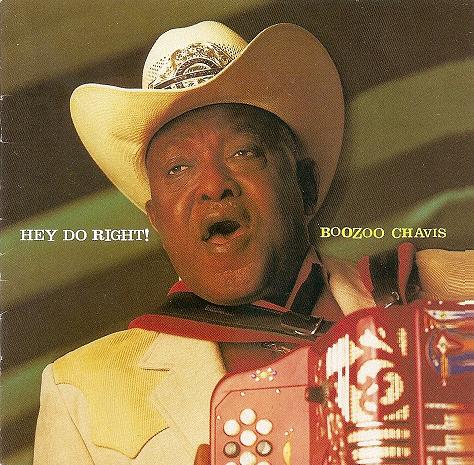
Later this month, the Warner distributary Discovery Records, in a joint venture with Austin's Antone Records, will release Hey Do Right!, Chavis's ninth album since his return to recording ten years ago. In addition to including a new rendition of "Zydeco Lady"--Chavis's accordion-powered version of the Johnnie Taylor classic "Disco Lady"--it features two of his catchiest animal songs ever: "I Got a Camel" (Chavis's tribute to one of his personal, money-making race horses) and "You're Gonna Look like a Monkey" (the funniest ugly joke set to music since Gillette's "Mr. Personality"). In keeping with his misanthropic outlook, however, Chavis is only partially happy with the album's imminent release. For reasons that he explained in detail from his home in Lake Charles just before Christmas, his reign as the "King of Zydeco" (an honor bestowed upon him by the Louisiana Music Hall of Fame in 1994) has, in many ways, just been one damn thing after another. Not that his many fans will mind, of course, as long as Chavis continues to release one damn good album after another.


Your new album will be your first for Discovery Records after a decade's worth of recordings for Rounder and Floyd Soileau's Maison de Soul. Why the switch?
Well, they [Discovery] paid a little more money, I think. But, anyway, I don't wanna go into all of that. You asked me a hard question right quick!

Sorry.
You know what I'm talkin' about. A lot of times I tell people, "Don't put that in that interview!" But they put that in there, and when it comes out in the paper, I say, "I told them don't put that!" But you said, "What was our reasons [for switching]?" One reason was they paid more money, you know. So my agent and my lawyer said, "Well, make it with Antone's."

There's nothing wrong with selling your music to the highest bidder is there?
But they took a long time before they come out with the doggone record! They took over a year-and-a-half to get the damn record out. Now, you see, I'm talking too much right there. But you asked me why we switched companies, and I tell the truth.

Were your experiences with Rounder and Maison de Soul better?
Rounder is good. Floyd Soileau is good. But I made a record with Elektra [1990's Boozoo Chavis], and they haven't paid me yet! I still ain't got my royalties.

You recorded Hey Do Right! a year-and-a-half ago?
Well, it took that long for them to get the thing together. We cut the album in May, and now we're way over here in January. We cut it in maybe twenty-five or thirty minutes!

But it's forty-three minutes long.
People said they'd never seen a man cut an album like that in the studio.

Was that the fastest you'd ever made a record?
I think I made one album faster than that at Maison de Soul.

Is it true that Hey Do Right! has already come out in Europe?
Yeah, they got it in Europe. Antone's has got some companies over there.

"You're Gonna Look like a Monkey" is a good song. Is there a story behind it? Were you singing to anyone in particular?
No, no. I ain't gonna put that. There is a story behind that, but I ain't commentin' on none of that. I give all my information away in interviews.

What do you mean?
That's the biggest thing that ever hurt me, that I talk too much, and I tell 'em too much, and then they know too much.

Who's "they"?
Keith Frank, Geno Delafose--all them guys. They get all my music, you understand? I tell on this and I tell that, and then everybody learns it and copies off of my music. Some of my fans from Washington, D.C., and New York know better. But the people in Lafayette and all that think these guys can outplay me! And I was elected in the Music Hall of Fame.

You were crowned "King of Zydeco."
Yeah. And there was a magazine that came out in Lake Charles last week. It talked about me and Clifton Chenier, not none of them punks. You asked me why did I switch companies. You know why? Because these young guys are runnin' around, cuttin' in Opelousas, in Lafayette, in Mamou, and in Church Point, and they're all makin' some little rinky-dink albums. They come up with a few new words, and they copy my music. Then they get booked to play in places over me! Even Offbeat put Beau Jocque over me. You see what I'm sayin'?

How does what you say in interviews affect this situation?
There's people come from New York to interview me at my house. We drink coffee, we sit down, we talk, and I tell 'em this and that. They ask me how zydeco first started, how did I make "Paper in My Shoe," and all that. I tell them, "Paper in My Shoe" 'cause my feet were cold. Didn't have no socks or none of that to put my foot in. Just the paper and put my own best shoes, you know?" People come from everywhere to interview me. Or they interview me on the phone. But they ask me some questions that makes me angry.

Sorry again.
Not you. It's O.K. for Offbeat. Every time we go to Mid City Bowl I pick up one. We got a bunch here, yeah. But every once in a while they got one come from another magazine. You know, I'm sixty-six years old. In other words, they don't treat me right.

We've would've requested this interview sooner, but we were waiting for Hey Do Right! to come out in this country.
It's good, isn't it?

Very good.
It's goin' like mad over there in Europe. I been playin' it in the dances so long that by the time the record comes out, it'll be old. They take so damn long to put it out! Floyd Soileau told me, "Boozoo, you coulda cut three albums with me in the time it takes them!" And I sure coulda. It don't take me but twenty minutes in the studio, man! I got my song in my head.

How exactly do the younger zydeco musicians make use of your ideas?
They take my song, or parts of it, and they change it. One time John Delafose asked me to play a number. He said, "Boozoo, I'm kinda tired." And I didn't think nothin' of it. He said, "You wanna play a couple?" I said, "Yeah, man!" Boy, and I was feelin' good! I went up there and played my number. And he took it and cut it before me! But I can outplay all of 'em! Day and night! They can't play by themselves. I can play by myself. All them musicians out there now, they gonna have to go to school again.

Does the challenge they pose cause you to work harder than you otherwise might?
No. It makes me mad (laughs). It don't make me work harder. I don't have to work hard. I don't have to think about it. It comes to me automatically.

That sounds like quite a gift.
Oh, yeah. Most of my songs, I get 'em off the bandstand. They come to me. I'll be playin' 'em right there, and my band will look at me and don't know what I'm playin'. But I'll keep playing it, and then I put it on the record. I'm sixty-six. I been playin' fifty years. Some of these guys started playing two years ago, three years ago, five years ago. I was playin' before they was born! And I try to tell people that! But they'll book them before me because they don't wanna pay me. They'll give them five, six-hundred dollars, and they gotta pay me two thousand. They're just tired of payin' me. I don't care who else you get. Get all you wanna get. But when I go, pay me.

Why did you disappear in the thirty years between your 1955 recordings (released by Rounder in 1990 as Lake Charles Atomic Bomb) and the 1986 Louisiana Zydeco Music recordings?
I got mad, I got disgusted, and I quit.

Why were you so mad and disgusted at such a young age?
They stole my money. They didn't pay me for "Paper in My Shoe."

Speaking of "Paper in My Shoe," did you, as legend has it, really get so drunk at the end of the session that you--
Fell off of my stool?

Yeah.
No.

Where did that story come from?
It come from Eddie Shuler [the session's producer], but it ain't true. I been playing music for fifty years, and I never fell down yet.

Did you give up music altogether during your thirty-year hiatus?
No, I played some dances around here.

Why did you decide to get back into the music in the mid-'80s?
I just wanted to show the world what I could do.

Where has your touring taken you?
We went to Washington, D.C., and Baltimore, Maryland. We blast when we go to Washington, D.C. We play in them clubs, too. At festivals you get up on stage, do your thing, and you're gone, but when you go play in a dancin' hall--in a beer joint--then them people rockin'. We went to Minneapolis, Minnesota. We went to Chicago ten or fifteen times. We went to New York eight or ten times. We played at Central Park. We played at the Union Station over there. We played at Chattanooga, Tennessee. We played in Philadelphia. We played in Miami. We played in Birmingham. We played in Atlanta, Georgia. We play in Maine. We played in Rhode Island. We played in Canada. We played in San Antonio. We played everywhere.

In which cities do you go over the best?
All of 'em.

Considering all the aspects of the contemporary zydeco scene that irritate you, what is it about making zydeco music for a living that keeps you doing it?
Well, zydeco is getting popular more and more, but not in youngsters. They like my music, but they'd rather dance with Keith Frank music, the youngsters. People don't know nothin' about music. All they want is that jumpin' music 'til they're jumpin' like a bunch of horses on the floor. They don't know what zydeco music is. If they did, they would say I was the best.


More Boozoo:

Tuesday, June 23, 2009

Boozoo Chavis: For Mature Audiences Only

(This piece was the cover story of the 1999 Jazz Fest issue of Offbeat magazine. Of all the interviews I conducted with Cajun and zydeco musicians, the one from which this article grew was my favorite by far.)

....................


The directions to his house that Boozoo Chavis gives journalists who call to schedule interviews with him can be confusing. Sometimes he says "turn right" when he means "turn left" and "turn left" when he means "turn right." Inevitably, if the journalist is lucky, one of Chavis's sons will be near the phone, overhear the confusion, and straighten out the mess.

Given Chavis's unusually strong distrust of interviewers, one can't help wondering if he provides wrong directions on purpose. "When they say 'interviews,' it's like you're hitting me in the head with a stick," he says. "But after I'm doin' it, it's O.K."

Chavis, sixty-eight, has made many such remarks over the years. Today he's making them from the kitchen table of his Lake Charles home over the sounds of an afternoon TV show playing unwatched in an adjacent room. Later tonight Chavis may or may not watch the Grammy Awards in that room. One reason he might watch is that he considers the Grammy one of the few truly meaningful awards in the music business.

One reason he might not watch is that his last album, Hey Do Right! (Antone's), came out over two years ago and therefore can't possibly be among the titles nominated in the only category in which a zydeco album can win: "Best Traditional Blues." Still fighting, fifteen years after beginning his comeback, for the recognition he deserves as one of zydeco's true living legends, he almost certainly won't derive enough pleasure from the sight of other musicians getting theirs to make an evening of it.

"'I'm comin' to interview you!'" he laughs, imitating the many journalists he's talked with over the years. "They ask you some of the damnedest questions you ever see. And when I tell them, 'Don't put that in there,' they put exactly that. If you say the wrong thing about an individual and it's on the tape, when them people see you, you don't know how to face them, and they don't know how to face you."

More than once, Chavis has vowed to stop giving interviews altogether. So far, however, his management and the record companies for whom he records have been able to find ways to get the gruff-voiced zydeco star to keep on talking.

On this sunny February afternoon, he'd prefer to stick to subjects that won't get him into trouble--subjects, in other words, that won't make him mad. Fair enough, you might think, but given the fact that with Boozoo Chavis almost every topic raises his hackles, the prospects for a meaningful visit all of a sudden look bleak.

When asked how long he spent at Dockside Studios in Maurice, LA, recording his brand-new album, the excellent Who Stole My Monkey? (Rounder), he says "one day" and launches into a colorful assault on those who approach the recording of albums like the building of Rome. No sooner has he begun, though, then he espies the tape recorder and asks, "You got that thing on?"

Yes. Is that all right?

"No. I'll quit right there."

For the next fifteen minutes, the tape recorder shut off, he gets quite a bit off his chest. He believes, for instance, that interviewers like to quote him complaining--"telling the truth," as he calls it--because they think his rural Creole English sounds funny. He also believes that Rounder has decided to use photographs of him with his mouth open on the front and back cover of Who Stole My Monkey? because he looks funny that way. In short, he's afraid of not being taken seriously, of being taken for a clown and nothing more.


Wilson "Boozoo" Chavis is much more than a clown. In addition to being one of the two most influential modern zydeco musicians (Clifton Chenier, of course, is the other), he's a successful race-horse trainer, husband, father, and grandfather. He's also a walking encyclopedia of Depression-era American pop music. He's happy to reveal, for instance (after having been assured that the tape recorder will be shut off any time he starts to grouse) that he based his hit from Hey Do Right!, "You're Gonna Look like a Monkey," on a song with a similar title that was popular when he was a boy.

"That's an old song, yeah. Somebody else cut it with a guitar way yonder in Louis Jordan and T-Bone Walker's time, way back there. People forgot about that song, but I remembered it because I used to play it way before the '80's. I don't know who cut it, white or black, but they cut it somewhere around in the blues time.** And it wasn't no zydeco. No. Nobody around here had sang and cut that. I'm the only one.

"Remember a long time ago they had that record about the old gray mule, the old gray mare or something?" The subject of old songs has wrought a surprising transformation of mood. All of a sudden, Boozoo Chavis the Zydeco Misanthrope is gone, replaced by Boozoo Chavis the Boy at Heart.

"Way back there we was picking cotton," he reminisces. "That's where that monkey come from, way up in those times. This was back in the '40's, about this monkey. Sometimes you'd hear a song on the radio--you'd hear some good songs--and you'd say, 'Man, I could play this. I can change this song to something.' I'd catch songs on the radio when we was pickin' cotton, when I was about eleven, twelve, thirteen, fourteen, fifteen years old. Yeah. This where the music come from.

"There was an old song that I used to think about cutting," he continues. A moment later he's singing "Oh, Susanna," unaccompanied and with considerable feeling: '''I'm going to Alabama with a banjo on my knee / Oh, Susie Anna, Susie Anna, don't you cry for me.' I was a little boy, nine or ten years old, singing that song all the time, and I was thinking about cuttin' that, but I said, 'No, I'm gonna be copyin' off of somebody.' I could cut that song. I know it just like it was today. Remember Louis Jordan?"

Chavis sings a verse of "Caldonia." "I could cut that. I've been knowing that song since I was a kid."

As Chavis sings, "'Choo-choo ch-boogie / take me right back to the track, Jack'" ("T-Bone Walker was playin' and all that"), one gets the impression that he could go on singing like this for days, that were he to sing all the songs he knows, all the blank tape in the world might not hold them. "'Open the door, Richard! / Richard, why don't you open that door?'" he sings. "'Hey, Mr. Landlord! Knock upon the door! / When the policeman comes around / tell him the joint is closed / and let the good times roll.'

"See," he says, "that's all them old songs. I can play all that." Pointing at his head, he adds, "That's all in here."


Not all of the songs that Chavis remembers from his childhood were staples of the Hit Parade. In fact, songs such as "Monkey and the Baboon," "Uncle Bud," and "Deacon Jones" are downright raunchy. Even in today's permissive climate, a radio station that played unexpurgated versions of the songs could lose its license.

Nevertheless, all three appear on Who Stole My Monkey? And although Chavis has cleaned up "Monkey and the Baboon" and performed it as the Sonny Boy Williamson standard "Bottle Up and Go," he's left both "Uncle Bud" and "Deacon Jones" untouched, performing them in all their X-rated glory. "Note," reads the fine print on the back of the album, "tracks fifteen and sixteen are not suitable for airplay." "Parental Advisory," reads a label on the front, "Explicit Content."

Chavis, who until today was unaware of the by now commonplace parental-advisory label ("If they ain't got that on there, the parents wouldn't know that it's rated X?"), thinks the warning is a good idea. "It's good to put that on there because the kids might get a-hold to it. 'Mama, I was listenin' to Mr. Boozoo's record.' 'What? You was listenin' to that?'"

According to Chavis, the songs, which sound like nothing so much as Redd Foxx gone zydeco, have their origins in real life. "My grandpa was named Uncle Bud. That's where this come from." He laughs. "His son was Dudley Pete. 'In 1819, twenty years ago / Uncle Bud beat the shit out of Cotton-eyed Joe'--you see? We'd be talkin' and in the field, in the room, anywhere, and we'd come up with all that kind of stuff."

Parents have little or nothing to fear from the remaining thirteen songs on Who Stole My Monkey? (which, by the way, Chavis says was supposed to be You Stole My Monkey). With the exception of the mildly risqué "Dance All Night" (the verses exhort listeners to take off their shoes, wigs, and drawers, respectively), the program consists of the sort of good-natured, rough-around-the-edges zydeco for which Chavis has become famous. And with the exception of "Marksville Slide" and "Sock It to Me," which feature the vocals of his son and rubboard player Charles, he sings lead on every song.

Chavis and his band, the Magic Sounds, recorded the new album last September, just three days after Chavis had been released from the hospital where he'd spent two weeks undergoing treatment for pneumonia and heart failure. Two days after they'd completed the album, they showed up for their annual gig at the Southwest Louisiana Zydeco Festival in Plaisance. "I was weak," Chavis remembers. "I had to play sitting down."

In addition to warning him not to perform too vigorously, his doctors also told him to eliminate salt and cigarettes. "I followed that for about a week," he chuckles. "Man, I couldn't eat that food without no salt!" Eventually, however, he knuckled under, gradually curtailing both his sodium and caloric intake.

Giving up cigarettes he has found more difficult. "I had quit before I went in the hospital. Then I went back to stealing one every once in a while. Then last week I said, 'O.K., I'm gonna quit.' So since last Friday I never smoked. Today's Wednesday. It don't bother me. I could've been quit a long time ago.

"Still," he smiles, casting an eye in the direction of his bedroom, "I got some cigarettes in that drawer. Kools, in a two-pack. And I got a lighter in that drawer too!"


Perhaps nothing captures the essence of Boozoo Chavis--the man and the musician--more fully than the fact that, after losing the top joints of two of the fingers on his left hand four years ago in a freak accident, he has continued performing and squeezing his accordion as if nothing serious had happened. "They don't hurt no more," he says matter-of-factly. "They get cold when the weather's cold, but they don't hurt."

"That was something else," he says of the experience. "One piece was hanging. Oh, I couldn't hardly stand it! But I stood it like a man."

Both the injury and the amputations occurred in Lake Charles on a Thursday. The next day Chavis was performing in Washington, D.C. "I had them fingers wrapped up because they was bleeding. But I kept going. I never stopped. And all them people just said, 'Boy, you're tough.'"


The tape ends. Chavis has been answering questions for an hour now, an hour in which seldom was heard a discouraging word. As soon as the tape recorder shuts off, however, he takes advantage of the freedom that comes with being off-the-record to criticize a lot of people whose identities are better left unknown--and to recite an a cappella version of another one of his X-rated ditties, "Boozoo's Blue Balls Rap."

Surely, his Grammy for "Best Parental-Advisory-Stickered Rap Performance by an Accordion-Playing Sexagenarian" can't be far off.

....................

**Chavis is probably thinking of "You're Bound to Look like a Monkey (When You Grow Old)," the only currently circulating version of which is Hank Penny's 1951 Western-swing version.


Monday, June 22, 2009

Beau Jocque (Offbeat 1996)


It's 7:25, Friday night, and the staff at Lafayette's Grant Street Dancehall has begun to get nervous. Beau Jocque and the Zydeco Hi-Rollers--one of the hottest zydeco acts in the land and Grant Street's featured attraction this evening--have yet to begin their 7:00 soundcheck. The hold up isn't the Hi-Rollers, all five of whom have been calmly shooting the breeze among themselves since they arrived half-an-hour ago. The hold up is Beau Jocque himself and the van he's driving, a van full of the Hi-Rollers' sound equipment and instruments, without which the soundcheck, not to mention the show, cannot go on.

There are, of course, two possible and entirely different reasons for why a performer might nonchalantly show up late: One is that he might simply be the no-good, shiftless type; the other is that he might be a star. And whether he's a rising, shining, or falling one doesn't matter nearly as much as the fact that, as a star, he can take his time getting to a gig if he wants to. What's a mere soundcheck, after all, to someone who, properly amplified or not, can easily rock, roll, boogie, and rumble even the hardest-dancing zydecajuns into sweat-soaked exhaustion?

Beau Jocque is such a someone. And, sure enough, when he pulls in at 7:45 and climbs calmly out of his van, he seems neither shiftless nor worried. "Immense" is more like it. At well over six feet, 200 pounds, he's the world's biggest zydeco star both figuratively and literally, a living and truly monumental monument to the power of the accordion and rubboard. One shakes his huge hand tentatively. Surely it could crush a journalist's fingers, especially if they look like the prying kind.

Not tonight, however. Rounder Records has notified him of the interview, and after presiding over the unpacking and proper on-stage installation of his gear, he retires happily to the dressing room for a chat. Once ensconced, his forbidding demeanor changes almost instantly. He may look like the "big grizzly-bear of a man" described in the liner notes of his new album, Gonna Take You Downtown, but he speaks softly and humbly. And when he gets around to discussing his just-completed tour of France, he sounds downright grateful.

"I only played my French songs, and the crowd was really surprised," he recalls. "They really liked it. They said the only other person who had gone to France and done that was Clifton Chenier about fifteen years ago. I even did some national French radio interviews in French."

It seems that the Cajun French he's spoken all his life was sufficient. "It was a surprise to me that I could communicate with them, but what this one older guy over there told me is that Cajun French is actually their old French. The slang is a little different, but it's understandable. Realizing that we could communicate that well in my home French language and theirs really made me feel good."

And, in return, he made the French people feel good, for as those familiar with his six albums know, no matter what language he's singing in, his international dance beat loses nothing in translation. On Pick Up on This!, his 1994 album, the song "'Gardez Donc! (Look at That!)" more than holds its own between the swivel-hipped "Give It to Me" and the cayenne-peppered ZZ Top treatment of John Lee Hooker's "Boogie Woogie." And on Git It, Beau Jocque!, his 1995 live album recorded in Opelousas and Breaux Bridge, "Couche dehors hier au soir" fits nicely between the rockin' raffle-ticket announcement "0394413" and the snippet of Lightnin' Hopkins' "Mister Charlie" that leads into "Shaggy Dog Two Step."

"I brought about eight boxes of the Nursery Rhyme CD with me to Europe," he explains, referring to the album he released on his own Beau Jocque label last year. "And I sold 'em all in two days. One box holds thirty, and I sold 'em at a hundred francs--which is twenty dollars--apiece. If I'd had T-shirts and caps, which I usually do, I could've sold all of that, as well. But we had done a stateside tour right before we left, and I didn't get a chance to restock. When we go back, though, I'm gonna make a special effort to have enough supply."


He'd also better have enough supply of Gonna Take You Downtown because once word spreads that it's his best studio effort to date, every Francois, Jacques, and Pierre is going to want one. Recorded in April at New Orleans' Ultrasonic Studios and produced by Scott Billington, Downtown crisply captures each element of the multi-faceted Hi-Rollers' sound and burnishes it to an intensity that even their live show--superior volume and all--doesn't match.

The title track, for instance, which comprises the hour-long disc's first five minutes, establishes itself immediately as a roots-boogie monster: With Jocque's accordion lines recalling Steve Winwood's organ ones in "Gimme Some Lovin'," Wilfred "Caveman" Pierre's rubboard clatter embellishing Russell "Sly" Dorion's percussive guitar riffs, Steve "Skeeta" Charlot's drums snapping whip-like over Chuck Bush's nimble bass runs, and Michael Lockett's keyboards providing subtle support, the song throws down a challenge to any dancer who thinks he or she already possesses an arsenal of body movements adequate to any rhythm that could rumble down from a bandstand.

Then comes "Cisco Kid," which proves that Jocque has been studying War some more. On Pick Up on This!, he married "Low Rider" to a little something called "Hi-Rollers Theme" and ran with it for nearly eight minutes. This time he keeps himself to five, and in the compression such Hi-Roller gimmicks as Dorion's talkbox and Charlot's background vocal hijinx take on the advantage of surprise. And, lest one overlook it, Jocque's lead singing--some would say lead roaring--has a way of making even the most overrecorded war-horse sound new. So while his version of Bob Dylan's "Knockin' on Heaven's Door" goes on too long at seven minutes, it certainly gets one's attention, popping up as it does between the much more zydeco-friendly "Just One Kiss" and "Kinder Two Step."

"I'm optimistic about this album, because we've tried the material that's on it in different parts of the world, and people have really liked it," says Jocque, "in Switzerland especially. They didn't want me to get off the stage. They wanted one more, then one more, then one more. When I told 'em it was our last show in Europe, they really didn't want us to get off the stage."


Friday night's Grant Street crowd doesn't want them to get off the stage, either. Despite a lot of late arrivals--the band plays its first twenty minutes to about forty beer-bottle-clutching wallflowers--the floor eventually fills, and when it does, the Hi-Rollers up their own intensity a notch or two, until they seem less like Hi-Rollers and more like Fire Hazards.

Metaphorically, the band catches fire too often to count. While not the vocal foil for Jocque that Charlot had been, Erick Minix, the new drummer, rides the beat hard all night. And in an unusual show of a drummer's rapport with the crowd, he shares his oversized, yin-yang top hat with the audience for a few numbers.

Dorion, who recently replaced two former guitarists in the Hi-Roller lineup, gets the majority of the solo space, and it's not hard to see why: Besides his frequent use of the talkbox--he "sings" several measures of "Cisco Kid" and "Knockin' on Heaven's Door" with it--his solos sizzle. Bush, Pierre, and Lockett comp beneath him, playing rhythms and chords more felt than heard, and atop it all Beau Jocque plays clusters of thick, Gabbanelli-accordion notes and sings lyrics that tend to celebrate life's simple pleasures.

And for those who find such pleasures as making it stank ("Make It Stank"), breezin' ("It's So Easy When You're Breezin'"), and going to see Beau Jocque ("Alle Parti Pour Voi Beau Jocque") hard to identify with, a subtle code of classic rock 'n' roll details renders the songs familiar. Dorion's talkbox, after all, harks back to Peter Frampton, and Jocque's "It's So Easy When You're Breezin'" melody sounds like a loosened up version of Archie Bell and the Drells' "Tighten Up."

The interweaving of rock 'n' roll and zydeco comes naturally to Jocque, who, as he says, grew up listening to "Santana, ZZ Top, War, John Lee Hooker," music that he calls "hard-drive rock 'n' roll." "I was never too much for the laid-back kind of thing. Mostly I enjoy a hard drive done in a bluesy way, and I try to reflect that in my music." It's this potent combination of the old and the new, the familiar and the unfamiliar, that has made Beau Jocque the closest thing to an overnight sensation to emerge from southwest Louisiana in some time.


But it was something even more potent that made his emergence as a zydeco sensation possible in the first place.

"In 1987, I was in an accident in the refinery where I worked," he explains. "There was an explosion, and I got my back and right hip broken. I was paralyzed from the waist down for about a year. But after three surgeries they were able to repair my back and hip to where I could walk straight again.

"During that down time, I spent a lot of time with my dad, who plays the Cajun accordion. He'd always tell me that I'd never learn how to play it. Now, in the high-school band, I'd played tenor sax, baritone sax, trumpet, tuba, and--to annoy the band teacher--piano. But the accordion was not one of my school instruments. So my dad sort of challenged me, and I had to prove him wrong. Of course, that's what he wanted me to do. He conned me into playing the accordion. And since I wasn't able to do what I was doin' before--electrician work, industrial electricity, pipe welding, and stuff like that--playin' the accordion gave me a second chance."

These days, he readily admits that playing hard-driving zydeco to enthusiastic throngs is a lot more fun than electrician work and welding.

"More fun and more profitable," he laughs. "It offers unlimited benefits. I'm able to travel and see the world and to bring my wife and two boys. One is six and the baby is five--they're a year-and-a-half apart--and their gettin' ready to come to Paris with me this fall. It's just an exciting, happy thing that happened."

He pauses. "Actually, it was an answer to a lot of prayers. Bein' injured and bein' down and knowing that you can't do any more what you trained yourself to do can be very depressing. And it was very depressing."

That is, until Andrus Espre (as he was known then), the down-and-out electrician, became Beau Jocque, the Zydeco Hi-Roller. Less than a year after being "conned" by his dad into picking up the accordion, he was already testing the waters.

"I recruited some guys and got a little gang together. We'd play in the back yard on Sunday evenings, and the neighbors would come around, and we'd have fun and buy beer. Soon it got to be a regular thing, and the back yard would be full.

"Then one evening some people called and asked me if I'd sit in with 'em because their accordion player had gotten sick. I said, 'Sure, I'll give it a shot, but I don't want any hard time because I'm just starting.' But the people really liked it, and they never did hire the guy back. So I took over that group, made a few changes, and that's how it started."

Then came the Rounder deal, a deal that--his talent aside--has probably had more to do with his rapid ascension than anything else.

"They'd heard about the impact that I'd had around this area and of the new style of zydeco that I'd introduced, and they came down and listened. It was at the Quarterback Club here in Lafayette, and the odds were against me, man. I'd told all the guys in the band, 'Look, we gotta give it a hundred percent tonight.' Then my bass player got so drunk he fell down.

He laughs. "I fired him the next morning." And he laughs some more.


About the only aspect of his success story that Beau Jocque doesn't find funny is the jealousy with which some members of the southwest Louisiana zydeco fraternity have welcomed the big splash he's made in their small pond. Off the record, they grumble about the shortcut to popularity he's taken by adding accordion and rubboard to songs by War, ZZ Top, Dylan, and John Lee Hooker and calling them zydeco. It's the age-old purist heresy finally come home to roost in a genre that hasn't had to worry much about commercialism since Stanley "Buckwheat" Dural signed with Island and Rockin' Sydney sang "My Toot Toot." Beau Jocque, however, has an answer to their charges.

"All I can say to those people who approach me and say I haven't really paid my dues is that God blesses you for different reasons, and you have to be worthy of those reasons by livin' right and doin' right. I think that goes a long way because if you do good, usually good follows you, but if you do bad, bad will follow you.

"I also think," he continues, "that these people should take a second look at what they invest in. In any business, you'll only get out of it what you put in. I try to buy the best equipment and instruments that a musician can use, but a lot of times I'll run across a musician--a great musician--and he don't have nothin' to play on.

"I bought all the Hi-Rollers' drums, guitars, and keyboards, and I bought a really heavy-duty PA system. Then I hired a professional sound engineer, and all those things worked. People hear the quality, and they come back because of the quality. That's what I mean by getting out of it what you put into it. A lot of guys think it's just gonna happen, but it won't. You gotta find the best way that you can to make it happen and also believe there is a God, because without that nothin's gonna happen.

"I've gone both sides," he concludes. "At one time in my life, I was one of those misbehavers. But you only end up on a dead-end street. I don't wanna go preachin' or anything, but it pays to live right."


....................

Beau Jocque passed away in 1999 at the age of forty-five.