skip to main |
skip to sidebar
(As published in the Times of Acadiana ... )
.JPG) Not to imply that the crowd who packed the Heymann Center to see Little Richard last week was old or anything, but when you overhear pre-show chitchat like “I’ve been getting AARP stuff in the mail since I was fifty,” you know you’re not in a mosh pit.
Not to imply that the crowd who packed the Heymann Center to see Little Richard last week was old or anything, but when you overhear pre-show chitchat like “I’ve been getting AARP stuff in the mail since I was fifty,” you know you’re not in a mosh pit.
But no matter. The crowd that partially filled the Cajundome three years ago to see the Beach Boys wasn’t exactly chockfull of spring chickens either, yet a good time was had by all--and their grandchildren.
There weren’t many grandchildren at the Little Richard show. Despite his uncanny self-promotional skills, the sixty-four-year-old Rock and Roll Hall of Famer born Richard Penniman hasn’t bridged the generation gap the way the sixty-five-year-old Johnny Cash has.
Nevertheless, when he sets up behind a piano and a mic, he can still rock the decades away. Actually, he spent most of his Heymann show out from behind the piano. For every minute he spent pounding the ivories and “Whoo!”-ing his way through his greatest hits, he spent three stalking the stage, working the crowd with the timing of a comedian and the fervor of an evangelist.
Indeed, at times you could hardly tell whether his agenda was rock-and-roll, comedy, or evangelism, so abruptly did he shift gears.
On the rock-and-roll front, he and his nine-piece band banged out brief, hard-hitting versions of everything from “Good Golly Miss Molly,” “Tutti Frutti,” and “Lucille” to “I’ll Be Missing You (Every Breath You Take),” “I Saw Her Standing There,” and “Jambalaya.”
On the comedy front, he punctuated his steady stream of one-liners (“I screamed like a white lady!”) and non sequiturs (“Let’s have a big round of applause for my son Danny!” “I’m getting my own TV show in January!”) with his trademark “Shut up!” thirty-two times.
As for the evangelism--well, first some background.
Like Jerry Lee Lewis, Little Richard made headlines early in his career by turning his back on success and attending Bible college. But it wasn’t until a 1979 appearance on the Merv Griffin Show that he “came out” as a Christian. Distributing Bibles to Griffin’s audience, he credited the Lord with delivering him from drugs and homosexuality.
Seven years later, he released a gospel album, Lifetime Friend, on Warner Bros.
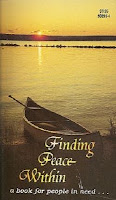 Little Richard didn’t hand out Bibles at the Heymann. Instead, his aisle-roaming assistants distributed a book called Finding Peace Within--A Book for People in Need, by E.G. White, L. Munilla, and C.E. Wheeling. Its 211 pages quote from the Bible, maintain that the end is near, and insist that the Sabbath should not be observed on Sunday. A blurb on the back says it's available in "more than one hundred languages."
Along with the book came a black-and-white photo of Little Richard, across which was written “God loves you and cares for you. Please don’t forget that. --Little Richard.”
He even preached an impromptu sermon at one point, challenging the male AARP members of the audience to give up their pornographic magazines and videos and to start loving their wives again. “I know she don’t look the way she used to,” he said, “but neither do you!” Amens followed. All this while the band played “I’m So Lonesome I Could Cry” softly in the background. What had started out as a rock-and-roll show, in other words, ended up as a Promise Keepers rally.
Let no one say Little Richard doesn’t understand the times.
The following piece and its accompanying graphics appeared in the July/August 1991 issue of the Door.
..... ..... .....
In his book A Third Testament, the late British curmudgeon and one-time Door interviewee Malcolm Muggeridge wrote of Augustine, Blake, Pascal, Kierkegaard, Tolstoy, Bonhoeffer, and Dostoevsky as “God’s spies”--men “in search of God” whose “special role” it was “to relate their time to eternity.” While they were, he wrote, “quintessentially men of their time” (men who, like actual spies, merged “into the social and political scene … echoing the current consensus”), they nevertheless provided a “bridge … between the darkness of the will and the light of the imagination … and a prophetic voice calling on us to cross it.” Now, Augustine, Blake, Pascal, et. al may have been God’s spies at one time, but mention their names to a Baby Boomer and watch his jaw go slack. It’s clear that God needs new spies, and at the risk of blowing their covers, I propose, from the field of rock ’n’ roll (common ground between the literate and the il-) the following canon: T Bone Burnett, Bob Dylan, Al Green, Little Richard, the Mercy Seat, Van Morrison, Maria Muldaur, and Sam Phillips. Consider the evidence …T Bone Burnett: Truth Decay (Takoma ’80). Another Door interviewee, Burnett has seen it all, done most of it, and written about it with the goofy abandon you’d expect from a guy christened after a steak. By the time he made this record, he’d already made three country-rock, gospel-inflected LPs with his fellow crazies Steven Soles and David Mansfield as the Alpha Band, toured with Dylan, and returned to the church of his youth. Truth Decay bridged the carnal-spiritual divide by marrying .jpg) Tom Waits-ian piss-factory narratives to Sun Studio rockabilly and leavening its preacher talk with seaminess and wisecracks. It’s true that later albums found naked women occupying more and more of his attention, but better babes than an obsession with the Rapture or some other Evangelical black hole.Bob Dylan: Shot of Love (Columbia ’81). Born-agains know all about Slow Train Coming and Saved, but this album has always smelled of bad faith. The problem was the middle of side one, where the world’s most famous “completed Jew” followed the right-on “Property of Jesus” with a hymn to Lenny Bruce. Born-agains didn’t know who Lenny Bruce was, so they went out and bought How to Talk Dirty and Influence People and maybe Albert Goldman’s exhaustive bio. When they found out that Bruce had been an unregenerate drug addict, a sex fiend, and a foul-mouthed comic whose jokes didn’t strike them as all that funny, they were sure Bob had lost his Christian marbles. In a sense they were right. But in another sense he was reconnecting with a world in which the unregenerate call the shots. Further proof of Shot of Love’s greatness: Rolling Stone hated it.
Tom Waits-ian piss-factory narratives to Sun Studio rockabilly and leavening its preacher talk with seaminess and wisecracks. It’s true that later albums found naked women occupying more and more of his attention, but better babes than an obsession with the Rapture or some other Evangelical black hole.Bob Dylan: Shot of Love (Columbia ’81). Born-agains know all about Slow Train Coming and Saved, but this album has always smelled of bad faith. The problem was the middle of side one, where the world’s most famous “completed Jew” followed the right-on “Property of Jesus” with a hymn to Lenny Bruce. Born-agains didn’t know who Lenny Bruce was, so they went out and bought How to Talk Dirty and Influence People and maybe Albert Goldman’s exhaustive bio. When they found out that Bruce had been an unregenerate drug addict, a sex fiend, and a foul-mouthed comic whose jokes didn’t strike them as all that funny, they were sure Bob had lost his Christian marbles. In a sense they were right. But in another sense he was reconnecting with a world in which the unregenerate call the shots. Further proof of Shot of Love’s greatness: Rolling Stone hated it.
Al Green: Live in Tokyo (Motown’81). For the complete scoop on Green, one of the greatest soul men ever, rent The Gospel According to Al Green from your local video store. Meanwhile, this recording, made in ’78 but unreleased for three years, captures plenty of Green’s legendary transition from sexual healer to Pentecostal pulpiteer. There are strong versions of “Belle” (“It’s you I want, but it’s Him [sic] that I need”), “Love and Happiness” (in which Jesus gets a name check before the fur starts to fly), and “You Ought to Be with Me,” a come-on to a woman that on this night metamorphosed into an ecstatic sermon replete with KJV quotations. Don’t know whether the cultural Buddhists in attendance got the gist, but they cheered anyway. Question for the ages: Were they moved by the Spirit or by a premonition that in fifteen years they’d own our corporate butts?Little Richard: Lifetime Friend (Warner Bros. ’86). Talk about a man ahead of his time. According to his own bad self, Little Richard Penniman has spent much of his life overdrugged and oversexed every which way. But, according to his good self, he loves the God of Abraham, Isaac, and Jacob. On this all-but-ignored major-label “comeback,” his bad self kept the music rockin’ while his good self kept the lyrics biblical. Every song bespoke a faith at least as .jpg) big as Sandi Patti (er, Sandi Patti’s), yet church folk were quicker to buy the Police instead. Maybe they were put off by Richard’s effeminate leer as captured in the cover photo or by that trace of eyeliner. (Goop it on like Tammy Faye and you’re O.K.) Or maybe they didn’t think that a man with whom they wouldn’t trust their sons could be trusted with God’s one and only.The Mercy Seat: The Mercy Seat (Slash ’87). Fronted by Gordon Gano, the leader of the acoustic sleaze-punk trio the Violent Femmes, this oddball quartet’s gimmick was to sing gospel, traditional and new, to acoustic sleaze-punk rave-ups. Actually, that was just gimmick number one. Another was to have guitarist Gano, drummer Fernando Menendez, and bassist Patrice Moran dress in matching tuxes. Gimmick number three was to have the lead singer, a statuesque black bombshell named Zena Von Heppinstall, wear dresses so tight and short that you couldn’t help wondering what Gano really meant by “mercy seat.” But it was the husky spunk of her singing as much as her great legs that sparked the concept. Best line ever about being ready for Judgment Day: “I don’t wanna be caught doin’ my nails when the world comes tumbling’ down.”Van Morrison: Common One (Warner Bros. ’80). This album is regarded by most as the Morrison not to own because it’s weird and amorphous. Besides, he’s sung more snappily about Jesus on Into the Music, Avalon Sunset, and Enlightenment. Yes, but remember this about God’s spies: They’re often up to more than they seem. Morrison has always been weird, from his go-to-hell attitude toward fans to his freakish overnight corpulence. As for amorphousness--well, when one sets out to convey the instant of conversion in a fifteen-minute song with few words and no melody (“When Heart Is Open”), he will sound somewhat “out there.” Out there for Van means growling and wheezing and howling and otherwise almost speaking in tongues. Or maybe he just had to sneeze really bad and didn’t want to funk up the mic. Stuff costs money, you know.Maria Muldaur: Live in London (Making Waves/Stony Plain ’85). Homiletic excerpt from the final three minutes of the last song: “Y’know, people, something might seem so very tempting to you, something might seem so very attractive to you, something might seem so very irresistible to you, ’til you feel like you just can’t rest, ’til you go out there, and you try that thing, or you buy that thing, or you, I don’t know, maybe you smoke that thing, or, mmmmm, you might drink that thing, or maybe you think it’s cool to go out and snort that thing. Whoa! You might even shoot that thing in you arm. I know temptation comes in a lot of different sizes and shapes. Yes it does. And, y’know, you might not even have to wait ’til the hereafter to pay the price--you might start payin’ the price as soon as tomorrow morning’! So before you do it, you better think about it twice! Before you do it, people, you oughta think about the price!
big as Sandi Patti (er, Sandi Patti’s), yet church folk were quicker to buy the Police instead. Maybe they were put off by Richard’s effeminate leer as captured in the cover photo or by that trace of eyeliner. (Goop it on like Tammy Faye and you’re O.K.) Or maybe they didn’t think that a man with whom they wouldn’t trust their sons could be trusted with God’s one and only.The Mercy Seat: The Mercy Seat (Slash ’87). Fronted by Gordon Gano, the leader of the acoustic sleaze-punk trio the Violent Femmes, this oddball quartet’s gimmick was to sing gospel, traditional and new, to acoustic sleaze-punk rave-ups. Actually, that was just gimmick number one. Another was to have guitarist Gano, drummer Fernando Menendez, and bassist Patrice Moran dress in matching tuxes. Gimmick number three was to have the lead singer, a statuesque black bombshell named Zena Von Heppinstall, wear dresses so tight and short that you couldn’t help wondering what Gano really meant by “mercy seat.” But it was the husky spunk of her singing as much as her great legs that sparked the concept. Best line ever about being ready for Judgment Day: “I don’t wanna be caught doin’ my nails when the world comes tumbling’ down.”Van Morrison: Common One (Warner Bros. ’80). This album is regarded by most as the Morrison not to own because it’s weird and amorphous. Besides, he’s sung more snappily about Jesus on Into the Music, Avalon Sunset, and Enlightenment. Yes, but remember this about God’s spies: They’re often up to more than they seem. Morrison has always been weird, from his go-to-hell attitude toward fans to his freakish overnight corpulence. As for amorphousness--well, when one sets out to convey the instant of conversion in a fifteen-minute song with few words and no melody (“When Heart Is Open”), he will sound somewhat “out there.” Out there for Van means growling and wheezing and howling and otherwise almost speaking in tongues. Or maybe he just had to sneeze really bad and didn’t want to funk up the mic. Stuff costs money, you know.Maria Muldaur: Live in London (Making Waves/Stony Plain ’85). Homiletic excerpt from the final three minutes of the last song: “Y’know, people, something might seem so very tempting to you, something might seem so very attractive to you, something might seem so very irresistible to you, ’til you feel like you just can’t rest, ’til you go out there, and you try that thing, or you buy that thing, or you, I don’t know, maybe you smoke that thing, or, mmmmm, you might drink that thing, or maybe you think it’s cool to go out and snort that thing. Whoa! You might even shoot that thing in you arm. I know temptation comes in a lot of different sizes and shapes. Yes it does. And, y’know, you might not even have to wait ’til the hereafter to pay the price--you might start payin’ the price as soon as tomorrow morning’! So before you do it, you better think about it twice! Before you do it, people, you oughta think about the price! .jpg) What about the price? What about the price? Whoa, people, I want you to steal away to the quiet of your room sometime and have yourself a little private talk with God and just ask him from the bottom of your heart, ‘Oh, Lord, what is it you want me to be doin’ down here?’” Sam Phillips: The Indescribable Wow (Virgin’88). As Leslie Phillips she was a bright spot on CCM playlists. As Sam Phillips she recorded this gorgeous folk-pop hookfest with some knob-twiddling and band-member selection from her producer (and future husband) T Bone Burnett. No, Leslie didn’t get a sex change. She just thought that “going secular” merited a new appellation, and in her sweet innocence she didn’t even know that rock ’n’ roll already had a Sam Phillips. Like her namesake (who produced Jerry Lee Lewis, after all), she knew that sexy music, when it was good, could feel like a struggle between flesh and spirit. Unlike her namesake, she was something to look at (and probably still is).
What about the price? What about the price? Whoa, people, I want you to steal away to the quiet of your room sometime and have yourself a little private talk with God and just ask him from the bottom of your heart, ‘Oh, Lord, what is it you want me to be doin’ down here?’” Sam Phillips: The Indescribable Wow (Virgin’88). As Leslie Phillips she was a bright spot on CCM playlists. As Sam Phillips she recorded this gorgeous folk-pop hookfest with some knob-twiddling and band-member selection from her producer (and future husband) T Bone Burnett. No, Leslie didn’t get a sex change. She just thought that “going secular” merited a new appellation, and in her sweet innocence she didn’t even know that rock ’n’ roll already had a Sam Phillips. Like her namesake (who produced Jerry Lee Lewis, after all), she knew that sexy music, when it was good, could feel like a struggle between flesh and spirit. Unlike her namesake, she was something to look at (and probably still is).
.JPG) Not to imply that the crowd who packed the Heymann Center to see Little Richard last week was old or anything, but when you overhear pre-show chitchat like “I’ve been getting AARP stuff in the mail since I was fifty,” you know you’re not in a mosh pit.
Not to imply that the crowd who packed the Heymann Center to see Little Richard last week was old or anything, but when you overhear pre-show chitchat like “I’ve been getting AARP stuff in the mail since I was fifty,” you know you’re not in a mosh pit. Little Richard didn’t hand out Bibles at the Heymann. Instead, his aisle-roaming assistants distributed a book called Finding Peace Within--A Book for People in Need, by E.G. White, L. Munilla, and C.E. Wheeling. Its 211 pages quote from the Bible, maintain that the end is near, and insist that the Sabbath should not be observed on Sunday. A blurb on the back says it's available in "more than one hundred languages."


.jpg)
.jpg)
.jpg)