Showing posts with label Boozoo Chavis. Show all posts

Monday, July 12, 2010

Music from the Zydeco Kingdom (2000)

(As published in the Times of Acadiana ... )

Music from the Zydeco Kingdom
(Rounder)

If this album comes closer than any other to functioning as the perfect zydeco anthology, it also proves why assembling the perfect zydeco anthology is a self-defeating task: One song apiece by the likes of Nathan Williams and Boozoo Chavis is too few, yet two or more would both throw off the balance and render the two tracks allotted to Clifton Chenier a number unfit for a king. Still, from Amédé Ardoin's opening cut to Chris Ardoin's closing one, this album never quits, and, if any non-performer knows zydeco, it's compiler Michael Tisserand, to whose excellent book The Kingdom of Zydeco (now in paperback) this serves as an enjoyable soundtrack. Rating: Four-and-a-half boudin balls out of five.

Thursday, July 8, 2010

Zydeco: The Essential Collection (2003)

(As published in the Times of Acadiana ... )

Zydeco: The Essential Collection
(Rounder Heritage Series)

In case you don’t know, the loose talk among Louisiana-music fans with their ears to the ground is that Creole accordion music as we’ve always known it is in a bad way. No good new albums of that stripe since the deaths of Boozoo and Beau Jocque, they say. Not even many bad ones of that stripe since the deaths of Boozoo and Beau Jocque, I’ll add. And the recording dates on the material enshrined on this typically non-essential essential compilation (thirteen out of seventeen pre-’99) confirm the diagnosis. Still, if indeed the end is near, the herein anthologized music of Nathan, Geno, Buckwheat, Chris Ardoin, Boozoo, and Beau Jocque, all previously released though it is, will make for some pretty joyful dancing on the grave. Rating: Three-and-a-half ragings against the dying of the light out of five.

Saturday, July 3, 2010

Backtalk with Boozoo Chavis (1997)

(My first encounter with the great Mr. Chavis, as published in Offbeat ... )

These days, talking with Boozoo Chavis--whose 1954 single "Paper in My Shoe" has been called the "first-ever zydeco hit"--is like talking to Muhammed Ali and Little Richard combined. Like Ali, Chavis likes reminding people that he's the greatest. Like Little Richard, Chavis likes reminding people that younger musicians have become popular by stealing ideas, riffs, and whole songs from him. And like both Ali and Little Richard, Chavis can talk the talk because he has not only walked the walk but also waltzed the waltz, two-stepped the two-step, and rock-and-rolled the Mid City Lanes Rock 'n' Bowl. In fact, at sixty-six, he still continues to put his music where his mouth is.

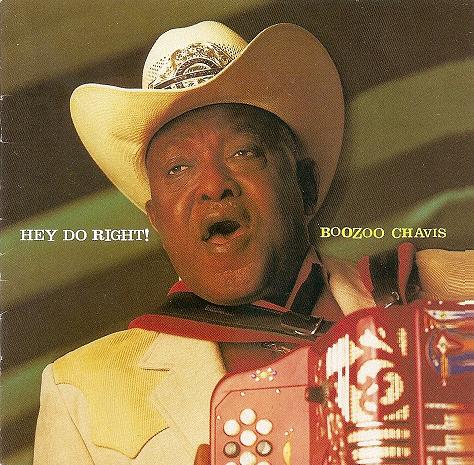
Later this month, the Warner distributary Discovery Records, in a joint venture with Austin's Antone Records, will release Hey Do Right!, Chavis's ninth album since his return to recording ten years ago. In addition to including a new rendition of "Zydeco Lady"--Chavis's accordion-powered version of the Johnnie Taylor classic "Disco Lady"--it features two of his catchiest animal songs ever: "I Got a Camel" (Chavis's tribute to one of his personal, money-making race horses) and "You're Gonna Look like a Monkey" (the funniest ugly joke set to music since Gillette's "Mr. Personality"). In keeping with his misanthropic outlook, however, Chavis is only partially happy with the album's imminent release. For reasons that he explained in detail from his home in Lake Charles just before Christmas, his reign as the "King of Zydeco" (an honor bestowed upon him by the Louisiana Music Hall of Fame in 1994) has, in many ways, just been one damn thing after another. Not that his many fans will mind, of course, as long as Chavis continues to release one damn good album after another.


Your new album will be your first for Discovery Records after a decade's worth of recordings for Rounder and Floyd Soileau's Maison de Soul. Why the switch?
Well, they [Discovery] paid a little more money, I think. But, anyway, I don't wanna go into all of that. You asked me a hard question right quick!

Sorry.
You know what I'm talkin' about. A lot of times I tell people, "Don't put that in that interview!" But they put that in there, and when it comes out in the paper, I say, "I told them don't put that!" But you said, "What was our reasons [for switching]?" One reason was they paid more money, you know. So my agent and my lawyer said, "Well, make it with Antone's."

There's nothing wrong with selling your music to the highest bidder is there?
But they took a long time before they come out with the doggone record! They took over a year-and-a-half to get the damn record out. Now, you see, I'm talking too much right there. But you asked me why we switched companies, and I tell the truth.

Were your experiences with Rounder and Maison de Soul better?
Rounder is good. Floyd Soileau is good. But I made a record with Elektra [1990's Boozoo Chavis], and they haven't paid me yet! I still ain't got my royalties.

You recorded Hey Do Right! a year-and-a-half ago?
Well, it took that long for them to get the thing together. We cut the album in May, and now we're way over here in January. We cut it in maybe twenty-five or thirty minutes!

But it's forty-three minutes long.
People said they'd never seen a man cut an album like that in the studio.

Was that the fastest you'd ever made a record?
I think I made one album faster than that at Maison de Soul.

Is it true that Hey Do Right! has already come out in Europe?
Yeah, they got it in Europe. Antone's has got some companies over there.

"You're Gonna Look like a Monkey" is a good song. Is there a story behind it? Were you singing to anyone in particular?
No, no. I ain't gonna put that. There is a story behind that, but I ain't commentin' on none of that. I give all my information away in interviews.

What do you mean?
That's the biggest thing that ever hurt me, that I talk too much, and I tell 'em too much, and then they know too much.

Who's "they"?
Keith Frank, Geno Delafose--all them guys. They get all my music, you understand? I tell on this and I tell that, and then everybody learns it and copies off of my music. Some of my fans from Washington, D.C., and New York know better. But the people in Lafayette and all that think these guys can outplay me! And I was elected in the Music Hall of Fame.

You were crowned "King of Zydeco."
Yeah. And there was a magazine that came out in Lake Charles last week. It talked about me and Clifton Chenier, not none of them punks. You asked me why did I switch companies. You know why? Because these young guys are runnin' around, cuttin' in Opelousas, in Lafayette, in Mamou, and in Church Point, and they're all makin' some little rinky-dink albums. They come up with a few new words, and they copy my music. Then they get booked to play in places over me! Even Offbeat put Beau Jocque over me. You see what I'm sayin'?

How does what you say in interviews affect this situation?
There's people come from New York to interview me at my house. We drink coffee, we sit down, we talk, and I tell 'em this and that. They ask me how zydeco first started, how did I make "Paper in My Shoe," and all that. I tell them, "Paper in My Shoe" 'cause my feet were cold. Didn't have no socks or none of that to put my foot in. Just the paper and put my own best shoes, you know?" People come from everywhere to interview me. Or they interview me on the phone. But they ask me some questions that makes me angry.

Sorry again.
Not you. It's O.K. for Offbeat. Every time we go to Mid City Bowl I pick up one. We got a bunch here, yeah. But every once in a while they got one come from another magazine. You know, I'm sixty-six years old. In other words, they don't treat me right.

We've would've requested this interview sooner, but we were waiting for Hey Do Right! to come out in this country.
It's good, isn't it?

Very good.
It's goin' like mad over there in Europe. I been playin' it in the dances so long that by the time the record comes out, it'll be old. They take so damn long to put it out! Floyd Soileau told me, "Boozoo, you coulda cut three albums with me in the time it takes them!" And I sure coulda. It don't take me but twenty minutes in the studio, man! I got my song in my head.

How exactly do the younger zydeco musicians make use of your ideas?
They take my song, or parts of it, and they change it. One time John Delafose asked me to play a number. He said, "Boozoo, I'm kinda tired." And I didn't think nothin' of it. He said, "You wanna play a couple?" I said, "Yeah, man!" Boy, and I was feelin' good! I went up there and played my number. And he took it and cut it before me! But I can outplay all of 'em! Day and night! They can't play by themselves. I can play by myself. All them musicians out there now, they gonna have to go to school again.

Does the challenge they pose cause you to work harder than you otherwise might?
No. It makes me mad (laughs). It don't make me work harder. I don't have to work hard. I don't have to think about it. It comes to me automatically.

That sounds like quite a gift.
Oh, yeah. Most of my songs, I get 'em off the bandstand. They come to me. I'll be playin' 'em right there, and my band will look at me and don't know what I'm playin'. But I'll keep playing it, and then I put it on the record. I'm sixty-six. I been playin' fifty years. Some of these guys started playing two years ago, three years ago, five years ago. I was playin' before they was born! And I try to tell people that! But they'll book them before me because they don't wanna pay me. They'll give them five, six-hundred dollars, and they gotta pay me two thousand. They're just tired of payin' me. I don't care who else you get. Get all you wanna get. But when I go, pay me.

Why did you disappear in the thirty years between your 1955 recordings (released by Rounder in 1990 as Lake Charles Atomic Bomb) and the 1986 Louisiana Zydeco Music recordings?
I got mad, I got disgusted, and I quit.

Why were you so mad and disgusted at such a young age?
They stole my money. They didn't pay me for "Paper in My Shoe."

Speaking of "Paper in My Shoe," did you, as legend has it, really get so drunk at the end of the session that you--
Fell off of my stool?

Yeah.
No.

Where did that story come from?
It come from Eddie Shuler [the session's producer], but it ain't true. I been playing music for fifty years, and I never fell down yet.

Did you give up music altogether during your thirty-year hiatus?
No, I played some dances around here.

Why did you decide to get back into the music in the mid-'80s?
I just wanted to show the world what I could do.

Where has your touring taken you?
We went to Washington, D.C., and Baltimore, Maryland. We blast when we go to Washington, D.C. We play in them clubs, too. At festivals you get up on stage, do your thing, and you're gone, but when you go play in a dancin' hall--in a beer joint--then them people rockin'. We went to Minneapolis, Minnesota. We went to Chicago ten or fifteen times. We went to New York eight or ten times. We played at Central Park. We played at the Union Station over there. We played at Chattanooga, Tennessee. We played in Philadelphia. We played in Miami. We played in Birmingham. We played in Atlanta, Georgia. We play in Maine. We played in Rhode Island. We played in Canada. We played in San Antonio. We played everywhere.

In which cities do you go over the best?
All of 'em.

Considering all the aspects of the contemporary zydeco scene that irritate you, what is it about making zydeco music for a living that keeps you doing it?
Well, zydeco is getting popular more and more, but not in youngsters. They like my music, but they'd rather dance with Keith Frank music, the youngsters. People don't know nothin' about music. All they want is that jumpin' music 'til they're jumpin' like a bunch of horses on the floor. They don't know what zydeco music is. If they did, they would say I was the best.


More Boozoo:

Tuesday, June 23, 2009

Boozoo Chavis: For Mature Audiences Only

(This piece was the cover story of the 1999 Jazz Fest issue of Offbeat magazine. Of all the interviews I conducted with Cajun and zydeco musicians, the one from which this article grew was my favorite by far.)

....................


The directions to his house that Boozoo Chavis gives journalists who call to schedule interviews with him can be confusing. Sometimes he says "turn right" when he means "turn left" and "turn left" when he means "turn right." Inevitably, if the journalist is lucky, one of Chavis's sons will be near the phone, overhear the confusion, and straighten out the mess.

Given Chavis's unusually strong distrust of interviewers, one can't help wondering if he provides wrong directions on purpose. "When they say 'interviews,' it's like you're hitting me in the head with a stick," he says. "But after I'm doin' it, it's O.K."

Chavis, sixty-eight, has made many such remarks over the years. Today he's making them from the kitchen table of his Lake Charles home over the sounds of an afternoon TV show playing unwatched in an adjacent room. Later tonight Chavis may or may not watch the Grammy Awards in that room. One reason he might watch is that he considers the Grammy one of the few truly meaningful awards in the music business.

One reason he might not watch is that his last album, Hey Do Right! (Antone's), came out over two years ago and therefore can't possibly be among the titles nominated in the only category in which a zydeco album can win: "Best Traditional Blues." Still fighting, fifteen years after beginning his comeback, for the recognition he deserves as one of zydeco's true living legends, he almost certainly won't derive enough pleasure from the sight of other musicians getting theirs to make an evening of it.

"'I'm comin' to interview you!'" he laughs, imitating the many journalists he's talked with over the years. "They ask you some of the damnedest questions you ever see. And when I tell them, 'Don't put that in there,' they put exactly that. If you say the wrong thing about an individual and it's on the tape, when them people see you, you don't know how to face them, and they don't know how to face you."

More than once, Chavis has vowed to stop giving interviews altogether. So far, however, his management and the record companies for whom he records have been able to find ways to get the gruff-voiced zydeco star to keep on talking.

On this sunny February afternoon, he'd prefer to stick to subjects that won't get him into trouble--subjects, in other words, that won't make him mad. Fair enough, you might think, but given the fact that with Boozoo Chavis almost every topic raises his hackles, the prospects for a meaningful visit all of a sudden look bleak.

When asked how long he spent at Dockside Studios in Maurice, LA, recording his brand-new album, the excellent Who Stole My Monkey? (Rounder), he says "one day" and launches into a colorful assault on those who approach the recording of albums like the building of Rome. No sooner has he begun, though, then he espies the tape recorder and asks, "You got that thing on?"

Yes. Is that all right?

"No. I'll quit right there."

For the next fifteen minutes, the tape recorder shut off, he gets quite a bit off his chest. He believes, for instance, that interviewers like to quote him complaining--"telling the truth," as he calls it--because they think his rural Creole English sounds funny. He also believes that Rounder has decided to use photographs of him with his mouth open on the front and back cover of Who Stole My Monkey? because he looks funny that way. In short, he's afraid of not being taken seriously, of being taken for a clown and nothing more.


Wilson "Boozoo" Chavis is much more than a clown. In addition to being one of the two most influential modern zydeco musicians (Clifton Chenier, of course, is the other), he's a successful race-horse trainer, husband, father, and grandfather. He's also a walking encyclopedia of Depression-era American pop music. He's happy to reveal, for instance (after having been assured that the tape recorder will be shut off any time he starts to grouse) that he based his hit from Hey Do Right!, "You're Gonna Look like a Monkey," on a song with a similar title that was popular when he was a boy.

"That's an old song, yeah. Somebody else cut it with a guitar way yonder in Louis Jordan and T-Bone Walker's time, way back there. People forgot about that song, but I remembered it because I used to play it way before the '80's. I don't know who cut it, white or black, but they cut it somewhere around in the blues time.** And it wasn't no zydeco. No. Nobody around here had sang and cut that. I'm the only one.

"Remember a long time ago they had that record about the old gray mule, the old gray mare or something?" The subject of old songs has wrought a surprising transformation of mood. All of a sudden, Boozoo Chavis the Zydeco Misanthrope is gone, replaced by Boozoo Chavis the Boy at Heart.

"Way back there we was picking cotton," he reminisces. "That's where that monkey come from, way up in those times. This was back in the '40's, about this monkey. Sometimes you'd hear a song on the radio--you'd hear some good songs--and you'd say, 'Man, I could play this. I can change this song to something.' I'd catch songs on the radio when we was pickin' cotton, when I was about eleven, twelve, thirteen, fourteen, fifteen years old. Yeah. This where the music come from.

"There was an old song that I used to think about cutting," he continues. A moment later he's singing "Oh, Susanna," unaccompanied and with considerable feeling: '''I'm going to Alabama with a banjo on my knee / Oh, Susie Anna, Susie Anna, don't you cry for me.' I was a little boy, nine or ten years old, singing that song all the time, and I was thinking about cuttin' that, but I said, 'No, I'm gonna be copyin' off of somebody.' I could cut that song. I know it just like it was today. Remember Louis Jordan?"

Chavis sings a verse of "Caldonia." "I could cut that. I've been knowing that song since I was a kid."

As Chavis sings, "'Choo-choo ch-boogie / take me right back to the track, Jack'" ("T-Bone Walker was playin' and all that"), one gets the impression that he could go on singing like this for days, that were he to sing all the songs he knows, all the blank tape in the world might not hold them. "'Open the door, Richard! / Richard, why don't you open that door?'" he sings. "'Hey, Mr. Landlord! Knock upon the door! / When the policeman comes around / tell him the joint is closed / and let the good times roll.'

"See," he says, "that's all them old songs. I can play all that." Pointing at his head, he adds, "That's all in here."


Not all of the songs that Chavis remembers from his childhood were staples of the Hit Parade. In fact, songs such as "Monkey and the Baboon," "Uncle Bud," and "Deacon Jones" are downright raunchy. Even in today's permissive climate, a radio station that played unexpurgated versions of the songs could lose its license.

Nevertheless, all three appear on Who Stole My Monkey? And although Chavis has cleaned up "Monkey and the Baboon" and performed it as the Sonny Boy Williamson standard "Bottle Up and Go," he's left both "Uncle Bud" and "Deacon Jones" untouched, performing them in all their X-rated glory. "Note," reads the fine print on the back of the album, "tracks fifteen and sixteen are not suitable for airplay." "Parental Advisory," reads a label on the front, "Explicit Content."

Chavis, who until today was unaware of the by now commonplace parental-advisory label ("If they ain't got that on there, the parents wouldn't know that it's rated X?"), thinks the warning is a good idea. "It's good to put that on there because the kids might get a-hold to it. 'Mama, I was listenin' to Mr. Boozoo's record.' 'What? You was listenin' to that?'"

According to Chavis, the songs, which sound like nothing so much as Redd Foxx gone zydeco, have their origins in real life. "My grandpa was named Uncle Bud. That's where this come from." He laughs. "His son was Dudley Pete. 'In 1819, twenty years ago / Uncle Bud beat the shit out of Cotton-eyed Joe'--you see? We'd be talkin' and in the field, in the room, anywhere, and we'd come up with all that kind of stuff."

Parents have little or nothing to fear from the remaining thirteen songs on Who Stole My Monkey? (which, by the way, Chavis says was supposed to be You Stole My Monkey). With the exception of the mildly risqué "Dance All Night" (the verses exhort listeners to take off their shoes, wigs, and drawers, respectively), the program consists of the sort of good-natured, rough-around-the-edges zydeco for which Chavis has become famous. And with the exception of "Marksville Slide" and "Sock It to Me," which feature the vocals of his son and rubboard player Charles, he sings lead on every song.

Chavis and his band, the Magic Sounds, recorded the new album last September, just three days after Chavis had been released from the hospital where he'd spent two weeks undergoing treatment for pneumonia and heart failure. Two days after they'd completed the album, they showed up for their annual gig at the Southwest Louisiana Zydeco Festival in Plaisance. "I was weak," Chavis remembers. "I had to play sitting down."

In addition to warning him not to perform too vigorously, his doctors also told him to eliminate salt and cigarettes. "I followed that for about a week," he chuckles. "Man, I couldn't eat that food without no salt!" Eventually, however, he knuckled under, gradually curtailing both his sodium and caloric intake.

Giving up cigarettes he has found more difficult. "I had quit before I went in the hospital. Then I went back to stealing one every once in a while. Then last week I said, 'O.K., I'm gonna quit.' So since last Friday I never smoked. Today's Wednesday. It don't bother me. I could've been quit a long time ago.

"Still," he smiles, casting an eye in the direction of his bedroom, "I got some cigarettes in that drawer. Kools, in a two-pack. And I got a lighter in that drawer too!"


Perhaps nothing captures the essence of Boozoo Chavis--the man and the musician--more fully than the fact that, after losing the top joints of two of the fingers on his left hand four years ago in a freak accident, he has continued performing and squeezing his accordion as if nothing serious had happened. "They don't hurt no more," he says matter-of-factly. "They get cold when the weather's cold, but they don't hurt."

"That was something else," he says of the experience. "One piece was hanging. Oh, I couldn't hardly stand it! But I stood it like a man."

Both the injury and the amputations occurred in Lake Charles on a Thursday. The next day Chavis was performing in Washington, D.C. "I had them fingers wrapped up because they was bleeding. But I kept going. I never stopped. And all them people just said, 'Boy, you're tough.'"


The tape ends. Chavis has been answering questions for an hour now, an hour in which seldom was heard a discouraging word. As soon as the tape recorder shuts off, however, he takes advantage of the freedom that comes with being off-the-record to criticize a lot of people whose identities are better left unknown--and to recite an a cappella version of another one of his X-rated ditties, "Boozoo's Blue Balls Rap."

Surely, his Grammy for "Best Parental-Advisory-Stickered Rap Performance by an Accordion-Playing Sexagenarian" can't be far off.

....................

**Chavis is probably thinking of "You're Bound to Look like a Monkey (When You Grow Old)," the only currently circulating version of which is Hank Penny's 1951 Western-swing version.


Boozoo Chavis: R.I.P.

(As published in the Times of Acadiana, May 15, 2001)

When Boozoo Chavis died last week at the age of seventy, zydeco lost more than a living legend and a musical original. It also lost its most colorful and lovably irascible character.

There was no secret to his appeal: the man was a riot. He could turn a pro forma interview into an evening with Rodney Dangerfield. Not that Dangerfield would ever choose to make comedic hay out of Chavis’s favorite subjects--himself, zydeco, and horse racing, in that order--but if he were to, he’d do it with the same devil-may-care candor. “I’ve been married forty-seven years to the same woman,” Chavis once told me, explaining the duration of his success. “And when I play that dance tonight, I come back with money. I didn’t sneak and give twenty or thirty dollars to this woman here. I didn’t pay no forty dollar for no motel room.”

Chavis didn’t like being thought of as funny. He thought people were laughing at him, not with him. The real-life situations out of which his humor grew were often painful. Most of them had to do with his being ripped off: not receiving royalties for recordings or credit for songs that others had “stolen” from him, suffering the financial repercussions of having to play second fiddle to younger zydeco stars who “don’t know nothin’,” finding that a record company had put a photo of him with his mouth open on his CD cover when he’d specifically asked them not to.

I had the pleasure of interviewing him twice, the first time in January 1997, by phone. No sooner had his wife picked up the receiver than he told her to tell me he couldn’t talk because he’d just gotten out of the shower and had shampoo in his eyes. “I just got out of the shower and I got shampoo in my eyes!” he repeated when she put him on anyway. No one--not his publicist, his manager, or my editor--had told me that, aside from making zydeco history with “Paper in My Shoe” in 1955, Chavis was best known for his hatred of interviews.

Two years later I was assigned another Boozoo story. This time he agreed to host me at his Lake Charles home, even giving me the directions himself. There was only one stipulation, of which he did not apprise me until I’d arrived: he would not talk into a tape recorder. Only after I’d spent twenty minutes assuring him that I wouldn’t reproduce anything libelous would he go on the record.

One exchange in particular stands out. Why, I asked, had he returned to performing in the mid-’80’s after a thirty-year layoff?

He paused, then said, “I just wanted to show the world what I could do.”

No one who ever saw or heard what he could do would ever think he was joking. R.I.P.